Imagine playing your favorite sport or walking down the stairs when, suddenly, you get struck in the face and experience sharp pain. You begin to vomit blood and immediately realize something serious has occurred. Your tooth is no longer in your mouth; it lies on the ground, capturing your attention. Your mind races, your palms clench, and you wonder if you will ever smile as you once did.
That is a distressing situation that thousands of people encounter daily. You may have seen it happen to a friend during a basketball game, or perhaps your younger sibling lost a tooth while riding a bike. One of the most severe dental emergencies is a knocked-out tooth, also known as an “avulsed tooth.” Fortunately, if you know the appropriate steps and act quickly, there is a strong likelihood that the tooth can be saved and restored to its original position.
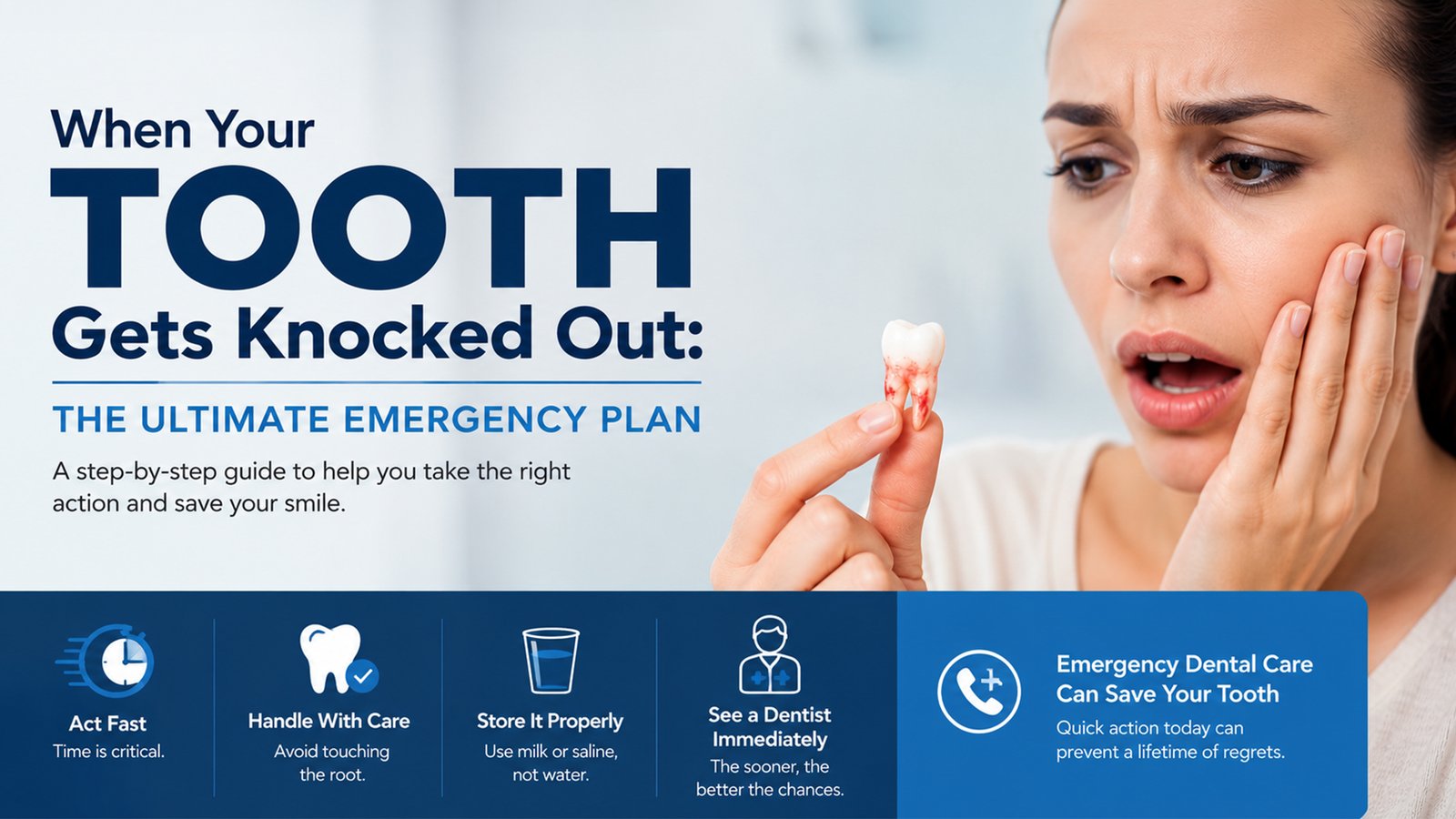
Time is critical when a tooth gets knocked out. The sooner you seek treatment, the greater the likelihood your tooth will survive this traumatic event. Consider your tooth as a plant uprooted and in need of replanting in its unique environment to survive. In this guide, you will find step-by-step instructions for handling a dental emergency, from the initial incident through professional dental care.
The First 60 Seconds: The Critical Window of Opportunity
The first minute following a dental injury is essential for saving a tooth. Although you may feel disoriented due to shock, it is important to focus on locating the tooth as quickly as possible. Remain calm; despite the presence of blood and oral discomfort, maintaining composure will help you take the necessary actions.

First, check the scene of the accident. Your tooth could have fallen on grass, concrete, or even in a puddle of water. Teeth can fly far when knocked out, so look around broadly where you were standing. If you are indoors, check under furniture, corners, or where the tooth may have bounced. Ask for someone else to assist you in the search, as the more eyes, the more they will find.
After you locate your tooth, don’t pick it by the white & shiny area. The white part is known as the crown, and although it is where you are likely to pick it up, you should only touch the root if necessary. The root was the yellowish portion that was in your gum, and it contains small cells on its surface that aid the vitality of your tooth in your mouth. They are very sensitive and prone to death when handled roughly or when their fingers come in contact with them.
The clock is now ticking, and you don’t have time for more than a minute or two looking. If you cannot locate the tooth, it’s better to seek medical care for your damaged mouth than to continue searching for it. Teeth may also be swallowed or lost for good, and that’s fine; these days, dentists have great methods for replacing missing teeth.
Cleaning Your Tooth: The Right Way vs. The Wrong Way
You may realize that your sweet tooth is dirty, grassy, or otherwise grossly disgusting. When you face such a situation, your first reaction is likely to be to wash it off like a dirty dish, but this could be a major mistake that can be deadly for your tooth! When a tooth gets knocked out, a gentle touch & the right technique are necessary to clean it.
If your tooth appears dirty, carefully hold it by the white part (crown) and gently wash it with clean water. If possible, use room-temperature water, as very hot or very cold water may shock the delicate root cells: no soap, alcohol, or cleaning products, just plain water. Rinse the tooth for a maximum of 10 seconds, and be careful not to scrub or rub the root area of the tooth.
Whatever you do, don’t try to remove anything that’s stuck to the root. If there’s a piece of gum tissue or other material attached, leave it alone. These bits may even assist in healing the tooth during reattachment by the dentist. Also, never use a towel or tissue paper to dry your tooth out. The tooth root needs to be kept moist, or those important cells will perish.
People tend to brush their teeth clean or wipe them with their shirt. Such movements can cause damage to the surface of the root, such that the tooth will no longer be able to reattach to your jawbone properly. Remember: You do not want the tooth to shine like a new tooth; you want to gently remove any visible dirt while leaving the root healthy & ready for reimplantation!
Storage Solutions: Keeping Your Tooth Alive Until Help Arrives
Once you’ve gently cleaned your tooth, you must find a suitable place to store it until you can visit a dentist. It’s as significant as locating & cleaning the tooth to get the right storage method; otherwise, your tooth will die even if all other steps are perfect. Your tooth is similar to a living thing requiring the proper surroundings to survive outside of your mouth.
The ideal place to keep your knocked-out tooth is back in its original tooth socket (the hole it came out of in your gum). If you are old enough to put it back in without swallowing, gently place the tooth back in the socket and hold it in place with a clean cloth that you bite down on. That will preserve the tooth in its natural state and increase its odds of survival. But sometimes it’s not possible to put the tooth back in your mouth, particularly for young children who may swallow it or if the socket is too badly damaged. In such instances, you have to search for the best alternative storage method. Surprisingly, milk is excellent for storing knocked-out teeth, containing just the right kind of nutrients & pH levels to keep the root cells alive, much better than salt water. Add some milk to a cup or container, then drop the tooth in.

Saliva will do in a pinch if you don’t have milk. You can place the tooth in your mouth if you are not too young to spit it out, or spit it into a container and place the tooth in your spit. Others have special tooth-saving solutions in their first-aid boxes, but not all schools and sports facilities have them. Avoid keeping your tooth in ordinary water, as it can damage the root cells more than it benefits them.
Getting Professional Help: Racing Against Time
Your next task is to get to a dentist as soon as possible, after your tooth has been safely cleaned & stored. Time is still your enemy; the sooner you see a dentist after the accident, the better, and certainly within one hour. Two hours have significantly reduced the chances of survival of your tooth, so don’t delay in deciding that this is “serious enough” to go to an emergency room.
Call your regular dentist first, even during after-hours and on weekends. Many dental offices have emergency numbers to call a dentist who can come to the office or know another open dentist. Describe a knocked-out permanent tooth & tell where to go first. That is a true dental emergency; don’t minimize it or say “wait till Monday” if it’s the weekend.
If you are unable to get to your dentist, go to your local hospital emergency room. Although you don’t see a dentist in the ER, they can help you manage pain & bleeding and help you locate an emergency dentist. Some hospitals even have dentists on standby for situations like this! Take your tooth and its case with you, and be sure to pack your insurance cards and any frequently used medications.
Keep checking on your tooth’s storage while en route to help. When using milk, be sure to immerse the tooth totally. If the milk warms or the smell is off, discard it and use fresh milk. Be sure the container is stable and that the tooth doesn’t bounce around, as you might damage more of these delicate root cells.
The Professional Rescue

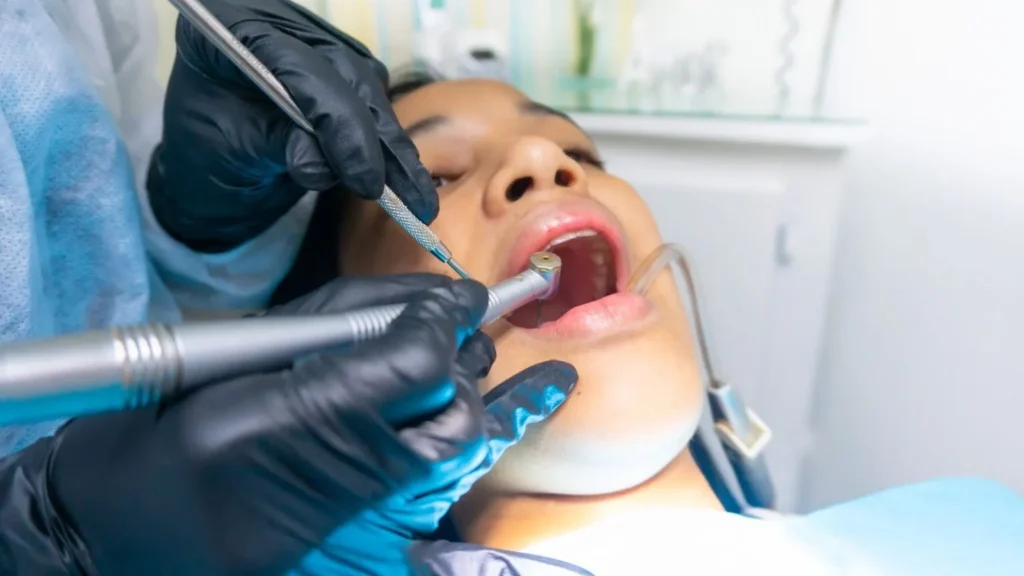
Once you are in the dentist’s office, they will be like a tooth superhero. First, they’ll check your mouth for other wounds and ascertain whether the tooth socket is prepared to accept your tooth back. There is also a possibility that the impact of the accident that caused your knocked-out tooth has also affected the gums, other teeth, or even the jawbone, so you should be sure that they take a careful look at it before moving forward.
The dentist will also take the time to examine your salvaged tooth under a special microscope to assess the condition of the root & crown. They are searching for any cracks, chips, or other damage that could impair the tooth’s ability to reattach. If all is well, they will clean the tooth again with special solutions that are even better than your emergency cleaning job.
Now the fun begins, getting your tooth home! The dentist will carefully place the tooth back into its socket & check that it fits properly. They may make X-rays to make sure the tooth is in the correct place & there is no damage to the bone around the tooth. When they are happy with the placement, they’ll cement your tooth to the neighboring teeth with a special splint to ensure it stays in place during healing.
Your Emergency Preparedness Plan
With this step, mention you know how to handle a knocked-out tooth emergency, so it’s time to get ready for such an event! Prepare a dental emergency kit that includes a small container for a tooth, information about your dentist and local emergency dental clinics, and a copy of these instructions written in simple language that can easily understood in a stressful situation.
Do teach these steps to your children, siblings, or friends who play sports or other activities that involve a risk of dental injuries. Consider role-playing the scenario so everyone knows what to do if it occurs. When time is critical, the better equipped you are, the more likely you will be to save a smile!
Keep in mind, without a knocked-out tooth, your beautiful smile doesn’t have to end. Many knocked-out teeth can be successfully replanted and serve their owners for many years if treated with proper care, quick thinking, and prompt professional dental care. Spread the word, who knows, you may be the hero who helps to save someone’s tooth and bring their smile back?