
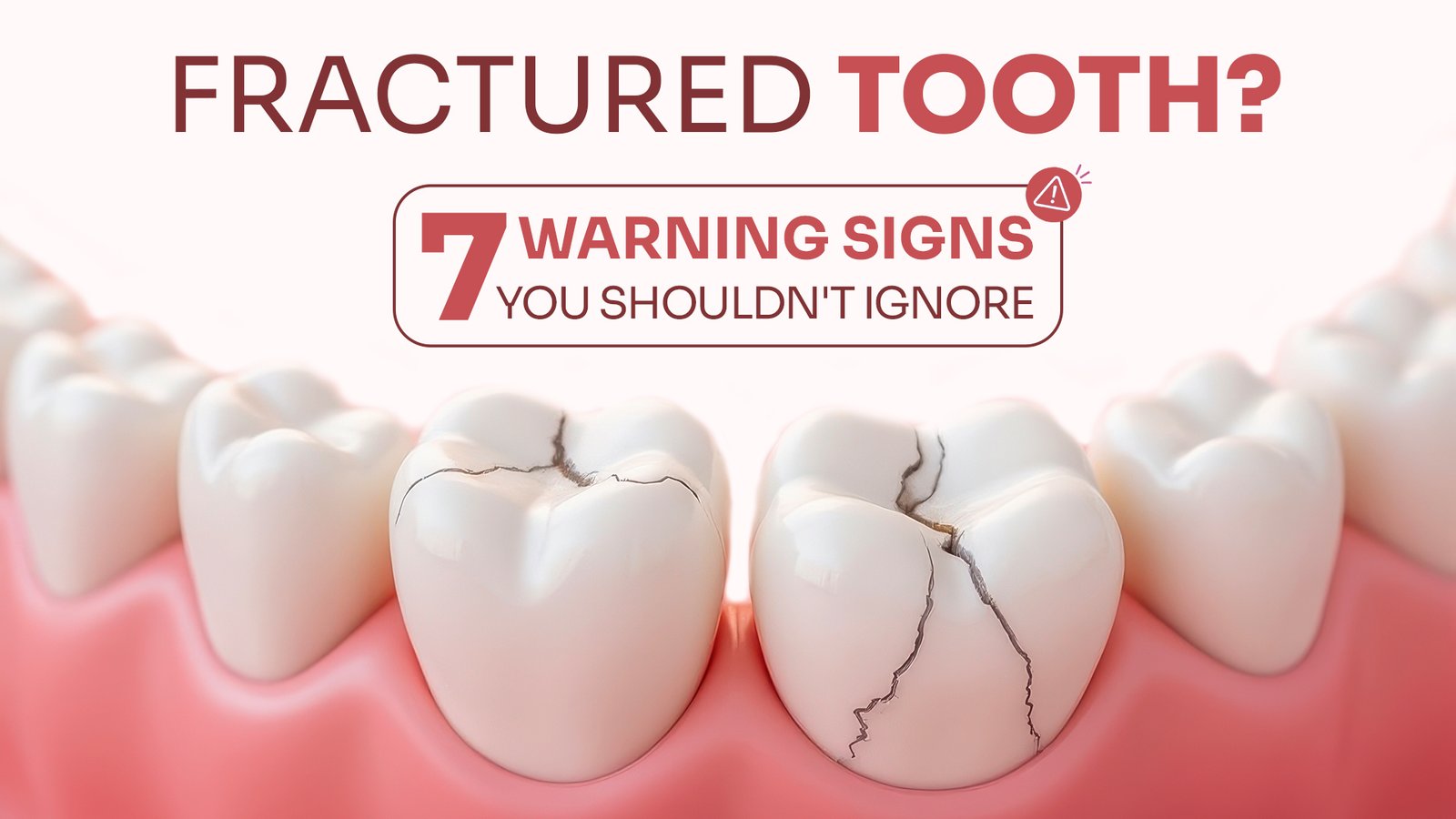
You take a bite of your sandwich and feel a sudden, sharp pain in your tooth. It disappears just as quickly as it came, so you brush it off and keep eating. Maybe a few days pass, or even a week, and it happens again. Then again. You know something isn’t quite right, but the pain doesn’t feel urgent enough to stop you in your tracks.
Cracked teeth or Fractured Tooth can be tricky to spot. The symptoms often come and go, and it’s not always easy to tell which tooth is causing the trouble or when it’s time to be concerned. Many people wait weeks or even months, hoping the problem will go away on its own. But even a small crack can become a bigger issue if it’s not addressed early.
Let’s walk through seven signs that your tooth might be cracked. I’ll explain what could be happening, when it’s important to call us right away, and how we can help you address a small problem before it turns into something bigger.
Understanding Fractured Tooth Symptoms: The 7 Critical Warning Signs
Eating your favorite foods should never be painful. If you notice discomfort when you bite or chew, it could be a sign that something more serious is going on. Catching the signs of a cracked tooth early can help you avoid bigger problems later. Here are seven warning signs to watch for.
Sharp Pain When Biting or Chewing
This is often the first sign that something isn’t quite right. You might feel a sharp, sudden pain when you chew, but it goes away as soon as you stop. Cracked teeth usually cause pain that comes and goes, while a cavity tends to ache more consistently. Hard foods like ice, crusty bread, or nuts can make the pain worse. Sometimes, the pain even moves around, making it tough to pinpoint exactly which tooth is the culprit.
Temperature Sensitivity That Won’t Go Away
If you find yourself wincing when you sip hot coffee or notice a sharp pain that lingers for a few seconds, it’s probably more than just normal sensitivity. Cracked teeth are often more sensitive to cold than heat, and this discomfort can last for weeks or even get worse over time. This is your body’s way of letting you know it’s time for a check-up.
Check the gum around the tooth that’s giving you trouble. Does it look redder or puffier than usual? Swelling in one spot can mean bacteria have found their way in through a crack and started an infection. The swelling might come and go, or you might notice it more after eating or at night. If you spot this, it’s a good idea to have it checked so we can help you feel better.
Pain Without an Obvious Cause or Location
This kind of pain can be especially frustrating. You know something hurts, but you can’t quite tell where it’s coming from. Sometimes the pain spreads to other teeth or even your jaw, making it hard to pinpoint the source. With cracked teeth, the pain often comes and goes because the crack can open and close as you bite, sometimes reaching the nerve and sometimes not.
Rough or Jagged Feeling When Touching with the Tongue
Run your tongue over your teeth. Do you notice anything that feels different—a bump, a rough spot, or an area that isn’t as smooth as it used to be?
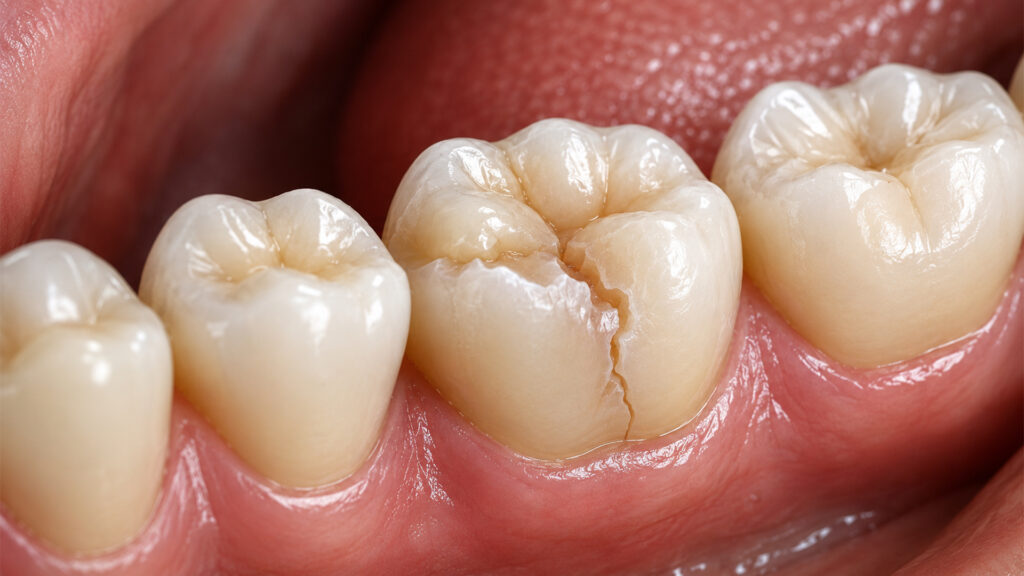
Sometimes, you might notice lines or small pieces that feel like a chip. Not every crack is easy to see, though. Vertical cracks, in particular, can be felt with your tongue even if you can’t spot them in the mirror. If you feel roughness along with pain or sensitivity, it’s a good sign to have it checked out.
Discomfort That Intensifies with Sweet or Acidic Foods
Normally, enjoying orange juice or a sweet treat shouldn’t make you flinch. If you feel a sharp or sudden pain when eating something sugary or acidic, it could mean there’s a crack letting those foods reach the sensitive part of your tooth. If this happens along with temperature sensitivity, it’s a sign that things could be more serious and should be checked soon.
Recurring Pain in the Same Area Over Time
If pain keeps coming back to the same spot, even after a few days or weeks of relief, it’s important to pay attention. Cracked tooth pain often returns and can get worse over time, unlike the quick fix of food stuck between your teeth. Seeing your dentist early can help prevent the problem from turning into something that needs more involved treatment.
When to Seek Immediate Fractured Tooth Treatment
Distinguishing Between Minor Cracks and Dental Emergencies
Not every crack is a dental emergency. Some are harmless, while others need quick attention. These are the small, hairline cracks that you may see on the surface of your tooth; they are known as craze lines. Very frequent, particularly as we get older. Superficial cracks are located on the surface and do not usually cause pain or other issues. Imagine them as the lines of an old pot. They are worrisome but do not affect the structure. Everyone has craze lines and doesn’t even realize it!
Deeper cracks are more serious. If a crack reaches inside your tooth, you’ll likely notice pain or sensitivity. This is your body’s way of letting you know it’s time to take action. These cracks won’t heal on their own and can get worse if ignored, so it’s important to have them checked promptly.
Sometimes, you need care the very same day. If you have severe or ongoing pain, can see a broken piece of your tooth, or have bleeding that doesn’t stop with gentle pressure, please call your dentist right away.
Waiting too long is the biggest risk. Everyday things like chewing, a bump to the mouth, or even sipping soda can push bacteria deeper into a cracked tooth.
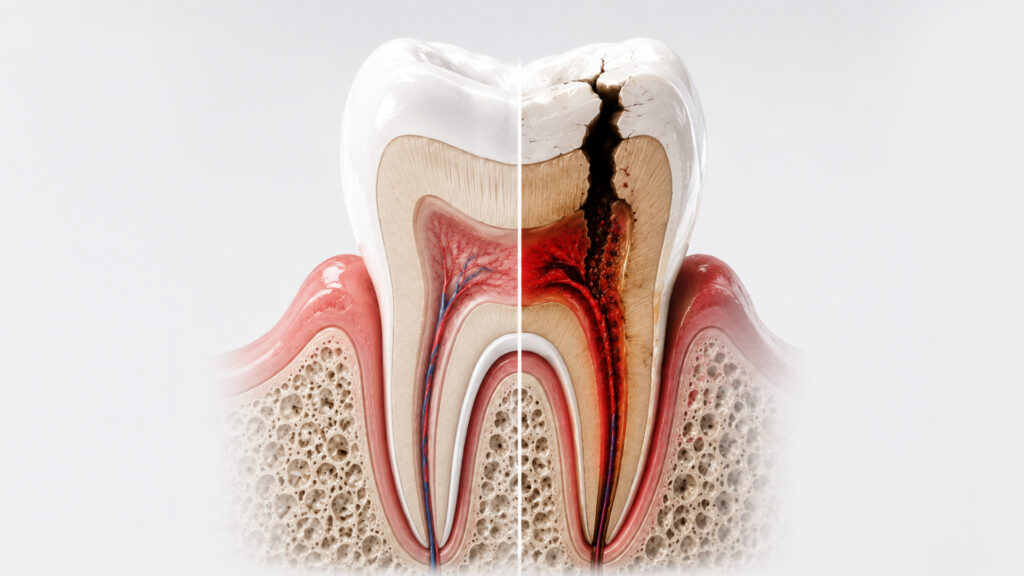
This raises the chance of infection. If an infection develops, it can turn into an abscess, which is painful and can become serious if not treated. The longer you wait, the higher the risk of losing the tooth.
Signs Your Fractured Tooth Has Become Infected
If your pain is constant and doesn’t get better with over-the-counter medicine, it’s a sign that something more serious is going on. This kind of pain often means there’s an infection inside your tooth.
Don’t ignore signs elsewhere in the body. It is important to seek dental treatment as soon as possible if a fever is present and tooth pain occurs, or if the face is swollen or hard to open. An illness that persists may also indicate an infection.
A small growth on your gums that is near a painful tooth may be an abscess. This indicates that the infection has spread to the tooth root and into the surrounding bone. In some cases, the bump will ooze pus, temporarily relieving pain while allowing the infection to continue spreading.
Cracked teeth can affect not only the tooth itself but also the surrounding bone and tissues, potentially leading to more serious health issues. Sometimes, dental infections can even extend to other parts of the body.
Available Fractured Tooth Treatment Options
Your dentist will closely examine your tooth to determine the best treatment. Where the crack is and how deep it goes will help determine what’s needed. Dental bonding uses a tooth-colored material to seal and protect the area, and can often be used to repair small cracks.
For larger cracks, a crown may be the best option. A crown covers your whole tooth and protects it from further damage so that you can chew comfortably again. Crowns are especially helpful when the crack hasn’t reached the nerve.
If the crack reaches the center of your tooth where the nerve is, a root canal may be needed before placing a crown. This treatment removes the infection, cleans the inside of the tooth, and gets it ready for a crown to keep it safe.
Cracks that go below the gum line and into the root are the hardest to treat. In these cases, the tooth may need to be removed. If that happens, we’ll talk with you about replacement options like implants or bridges, so you can keep chewing and smiling with confidence.
The sooner you treat a cracked tooth, the better. Early care helps you keep more of your natural tooth, and the treatment is usually simpler, less invasive, and more affordable. If a crack reaches the nerve, a root canal may be needed, but if we catch it early, we can often save the tooth before it gets to that point.
The American Dental Association stresses the importance of knowing your options so you can decide on what to do with your dental care. Full care includes patient education, so you know exactly what to expect during each phase of treatment.
What Happens If You Ignore Tooth Fracture Warning Signs
It’s easy to think a cracked tooth might heal by itself, but unfortunately, that’s not the case. Over time, cracks usually get worse, not better.
Every time you bite down, your teeth handle a lot of pressure. This stress can make cracks grow deeper and bigger. What starts as a small issue can slowly weaken your tooth over time.
Bacteria never turn down a chance. When a crack opens up, bacteria from the mouth invade the tooth’s interior. With this invasion, a previously restorable tooth may require root canal therapy or extraction. It becomes painful and may develop an abscess that will spread to the surrounding tissue.
About half the time, a crack goes all the way through the tooth and it can’t be saved. If that happens, the tooth will need to be removed, and we’ll talk with you about replacement options like implants or bridges. Losing a tooth can also cause other issues, like shifting nearby teeth or making chewing harder, which is why early treatment is so important.
Don’t forget about the monetary costs. The cost of a simple crown can run into a few hundred dollars. Only resorting to a root canal, crown, and eventual implant when necessary can escalate treatment costs to thousands of dollars.
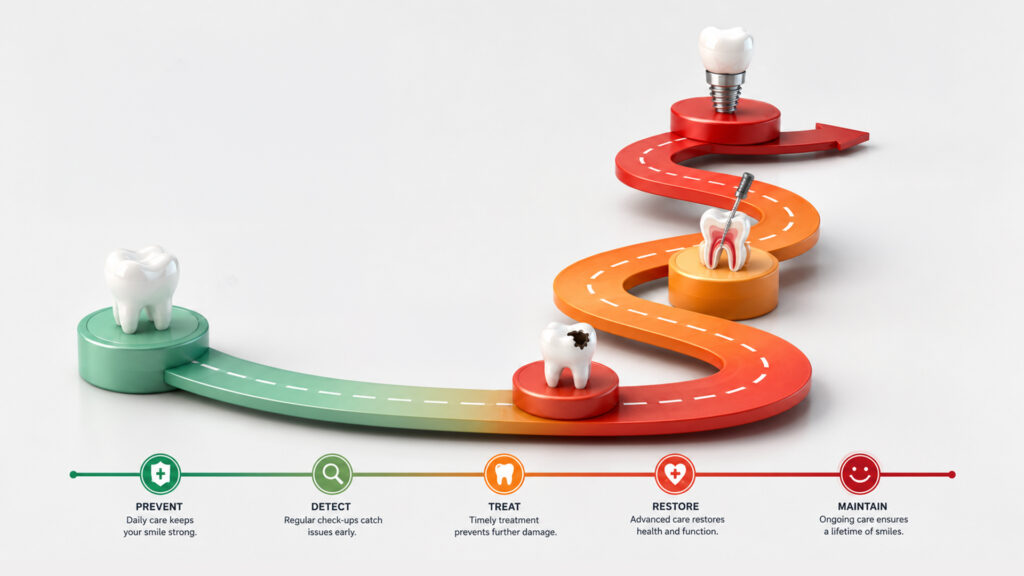
A study published in the Journal of the American Dental Association reported that treatment complexity and cost increase with delayed treatment.
Temporary Relief Measures While Waiting for Your Appointment
If you’ve already scheduled an appointment but have to wait a day or two, there are some things you can do at home to ease the pain and protect your tooth until we see you.
Try not to chew on the side with the cracked tooth. Every bite can make the crack worse or even break the tooth further. Stick to soft foods like yogurt, mashed potatoes, smoothies, soup, or scrambled eggs. Giving your tooth a break can help keep things from getting worse.
You can take over-the-counter pain medicine like ibuprofen for now. Just follow the instructions on the package and don’t take more than recommended. Remember, pain medicine only helps with the symptoms; it won’t fix the crack itself.
A warm saltwater rinse can help soothe your gums and keep them clean. Mix half a teaspoon of salt into a cup of warm water, swish it around your mouth for about 30 seconds, then spit it out. You can do this a few times a day, especially after meals, to help reduce irritation and wash away food particles.
If a piece of your tooth has broken off, save it. Wrap it in plastic with a little saliva or put the piece in a little milk. Do not allow it to become dry. Bring it to your premiere dental appointment. Sometimes dentists can reattach the fragments, but if they cannot, they will need the fragments to determine the extent of the damage.
These measures may help you feel better and preserve your tooth until you see your dentist, but they are not the solution to your dental issue. Even if you begin to feel better, it is important to keep this appointment so that we can ensure that the crack can be treated and you won’t have larger issues in the future.