
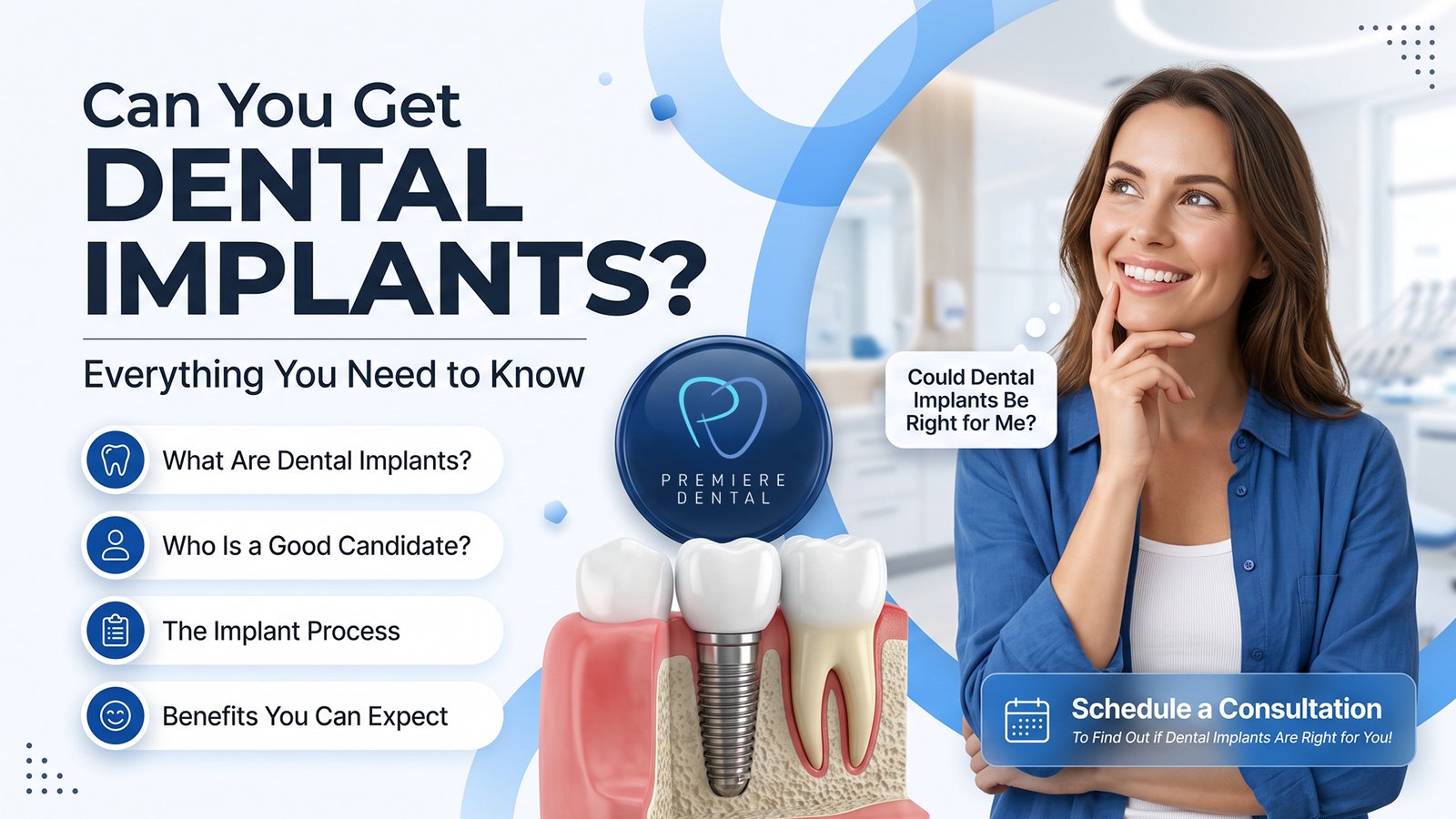
If you’re thinking about dental implants, you might be wondering if they’re right for you. Maybe you’ve lost a tooth, or you’re tired of dentures that slip or a bridge that just doesn’t feel comfortable. No matter what brings you here, you’re already taking a great first step by asking the right questions.
The good news is that many people can get dental implants, though it’s not the best fit for everyone. For those who are eligible, implants can be a wonderful way to restore your smile, boost your confidence, and make everyday life a little easier.
We’ll walk through what dental implants are, who might be a good candidate, how the process works, and how to care for them. By the end, you’ll have a clearer idea if dental implants could be a good option for you.
What Are Dental Implants?
Before we talk about who can get dental implants, it helps to understand what they are and how they work.
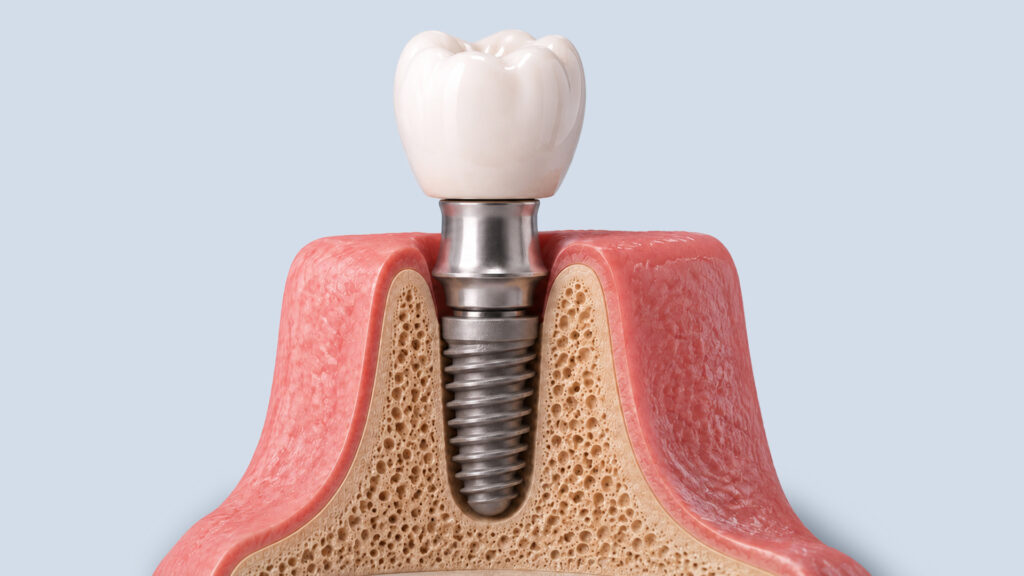
A dental implant is a small titanium post that replaces your tooth root. It’s gently placed into your jawbone, and once it has healed and bonded with the bone, a custom-made crown, the part that looks and feels like a real tooth, is attached on top.
The result? A replacement tooth that appears, feels, and performs almost like a natural tooth.
Let’s take a quick look at the three principal components of a dental implant:
- The implant post: A titanium screw inserted into the jawbone that serves as the root.
- The abutment: A small piece that secures the crown.
- The crown: The portion of the tooth that is visible and is shaped to fit with the surrounding teeth.
Dental implants are often considered the gold standard for replacing missing teeth. Unlike bridges, they don’t require any work on your neighboring teeth, and they help keep your jawbone healthy, something dentures and bridges can’t do.
Who Is a Good Candidate for Dental Implants?
This is the big question for many people. While dental implants are a great option for lots of folks, there are a few important things that need to be in place for them to work well.
Here are some of the main things we look for to see if dental implants are a good fit:
- You are an adult: In most cases, dental implants are not recommended for children and adolescents whose jawbones are still growing. Before implantation, the jaw must be fully mature.
- You have lost one or more teeth: Dental implants are the best way to replace them, so this is the obvious starting point.
- Your jaw has sufficient bone density: The implant post requires enough bone to attach to. If you have been missing a tooth for a long time, you may have bone loss.
- Your gums are healthy: Gum disease can hinder the healing process and the way the implant bonds with the bone.
- You are fairly healthy: Some health issues may make your surgery more complicated or slow your healing.
- You do not smoke or wish to quit: Implant failure is significantly increased by smoking.
- You are committed to good oral hygiene: Dental Implants require the same care as natural teeth do.
If most of these sound like you, there’s a good chance dental implants could work for you. The best way to know for sure is to come in for a thorough exam so we can look at your unique situation together.
Key Requirements for Getting Dental Implants
Let’s take a closer look at some of the most important things we consider.
Sufficient Jawbone Volume
The implant needs to be anchored securely in your jawbone. If there isn’t enough bone, the implant may not have the support it needs. It’s normal for the jawbone to shrink over time after a tooth is lost, sometimes more quickly than people expect.
The good news is that even if you’ve experienced some bone loss, you may still be able to get dental implants. A technique known as bone grafting can be used to increase bone volume. It will lengthen treatment duration, but it can make many people who otherwise would not qualify eligible.
Healthy Gums
Gum disease (also called periodontal disease) is a major obstacle to getting dental implants. However, the bacteria that cause gum disease can enter the surrounding tissue, leading to a condition known as peri-implantitis, which is gum disease around a dental implant.
Before dental implant surgery, it is important to treat and completely control any gum disease.
Overall Health
Because dental implants involve a small surgery, your body needs to heal well. Certain health conditions, like diabetes or autoimmune diseases, can slow down healing. This doesn’t always mean implants aren’t possible, but it does mean we’ll take extra care to review your health and make a plan that works for you.
Age Considerations
As stated above, dental implants are not put in children and teens. The jawbone must be completely formed, usually in the late teens to early twenties. There is no fixed age limit; however, many individuals in their 70s, 80s, and older have had dental implants placed.
Take an active role in oral hygiene
Dental implants can’t get cavities, but the gums around them still need care to stay healthy. Keeping up with brushing, flossing, and regular dental visits is the best way to make sure your implants last for years to come.
Medical Conditions That May Affect Your Eligibility
Dental implants may be more difficult depending on the health issues, but not impossible. Some of the most common are listed here and should be discussed with your dentist:
Diabetes
Diabetics with controlled diabetes may be able to have dental implants placed successfully. But uncontrolled diabetes will hinder healing and raise the risk of infection, so blood sugar levels must be controlled prior to and after surgery.
Osteoporosis
Bones that are weakened by osteoporosis may not be able to hold the implant in place. Furthermore, some drugs used to treat osteoporosis (bisphosphonates) may affect the healing process following dental surgery. However, it is not an automatic disqualification; it just has to be thoroughly assessed.
Heart Disease
Individuals with certain heart conditions may require special precautions before dental surgery, such as antibiotics. Your dentist and heart doctor will need to collaborate to decide on what to do.
Cancer and Radiation Treatment
The blood supply to the jaw can be decreased due to radiation treatment to the head or neck, which can impact healing. This will be a factor your dental team must take into account.
Autoimmune Conditions
Immune disorders such as lupus or rheumatoid arthritis, particularly when treated with immunosuppressive medications, can slow the healing process and increase the risk of infection.
The Dental Implant Process: Step by Step
Knowing what to expect should help ease any anxiety you may feel. What to look forward to in the process.
Step 1: Initial Consultation and Evaluation
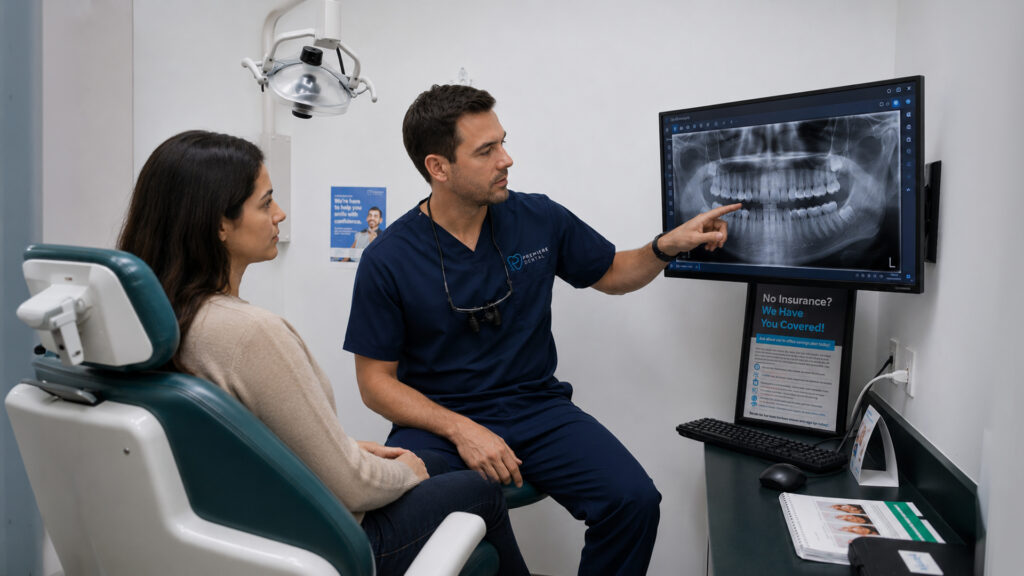
Your dentist or oral surgeon will review your medical and dental history, take X-rays or a 3D scan of your jaw, examine your gums, and discuss your treatment objectives. This is when they decide if you qualify and create your own treatment strategy.
Step 2: Preparatory Procedures.
These will be performed first if a bone graft, tooth extraction, or gum disease treatment is necessary. Time to heal should be allowed before implant placement.
Step 3: Implant Placement Surgery
This is the part of the surgery in which the titanium post is inserted into the jawbone. This is typically performed with local anesthetic, but sedation can be used. By far, most patients say it is less painful than they expected.
Step 4: Healing and Osseointegration
Once the implant is in place, the patient must allow the implant to “bond” with the bone. This can last from three to six months, depending on the person. A temporary crown can be used during this period.
Step 5: Abutment Placement
After osseointegration, the small component, called the abutment, is connected to the implant post. This is what the final crown will sit on.
Step 6: Crown Placement
The custom crown is attached to the abutment and matches the color, shape, and size of your natural teeth. The process is now finished.
How Long Does the Dental Implant Process Take?
One of the most common questions people have is about the timeline. The honest answer is that it varies quite a bit depending on your individual situation.
| Stage | Estimated Time |
| Initial consultation | 1-2 visits |
| Preparatory procedures (if needed) | 3-6 months |
| Implant placement surgery | 1 day |
| Osseointegration (bone fusion) | 3-6 months |
| Abutment and crown placement | 1-2 visits |
| Total time (approximate) | 6-12 months |
For people who don’t need preparatory procedures, the timeline can be shorter. Some patients with excellent bone health and simple cases may go through the process in as little as five to six months.
Dental Implants vs. Other Tooth Replacement Options
If you’re trying to decide between dental implants and other options, here’s a straightforward comparison.
Dental Implants vs. Dentures
| Feature | Dental Implants | Dentures |
| Feel | Like natural teeth | Can slip and feel bulky |
| Bone preservation | Yes | No |
| Maintenance | Brush and floss normally | Must be removed and cleaned |
| Lifespan | 15-25+ years | 5-10 years |
| Cost | Higher upfront | Lower upfront |
Dental Implants vs. Dental Bridges
| Feature | Dental Implants | Dental Bridges |
| Adjacent teeth affected | No | Yes (must be filed down) |
| Bone preservation | Yes | No |
| Lifespan | 15–25+ years | 10–15 years |
| Maintenance | Normal brushing/flossing | Special flossing required |
As you can see, dental implants generally come out ahead in terms of long-term function and oral health preservation, though they do come with a higher initial cost.
Cost of Dental Implants: What to Expect
Let’s discuss money, as it is one of the major factors people consider when using dental implants.
Average Costs
- Single dental implant (post + abutment + crown): $3,000 – $5,000
- Full mouth implants (All-on-4 or similar): $20,000 – $50,000+
- Bone graft (if needed): $500 – $3,000+
These figures can vary significantly depending on location, the complexity of your case, the materials used, and your dental provider’s experience.
Does Insurance Cover Dental Implants?
Some dental insurance policies still consider dental implants a cosmetic procedure and will not cover them, or may cover only part of the implant procedure, such as the crown. This is changing, but slowly, and more plans are beginning to add coverage for implants.
Be sure to verify this with your insurance company, as well as your dentist’s office:
- Payment plans
- The financing options for dental care
- The dental schools that provide implants at a discount under the supervision of licensed professionals.
How to Prepare for Dental Implant Surgery
Once you and your dentist determine that dental implants are the best option for you, preparation is crucial.
Before Surgery
- Stop smoking: Quitting at least a few weeks prior to surgery (preferably for good) will improve the chances for success.
- Manage any previous health issues: Keep diabetes, blood pressure, and other conditions under control.
- Obtain pre-op instructions from your dentist: This might include fasting before surgery if sedation is required.
- Make arrangements for transportation: Don’t drive yourself home after surgery, particularly if you are sedated.
- Stock up on soft foods: Make sure to have soft foods for the first few days after surgery.
Questions to Ask Your Dentist Before Moving Forward
- Am I a good candidate based on my current health?
- Are there any preparatory procedures to be carried out?
- How will the patient be sedated or anesthetized?
- How will the recovery be achieved?
- What is the total cost of this, and what financing options are available?
- How have you had a dental implant?
Caring for Your Dental Implants After Surgery
After your implants are placed, it’s important to take proper care of them to ensure long-lasting success.
Immediately After Surgery
- Swelling, slight pain, and possibly some bleeding will occur in the first few days.
- Apply pressure with ice packs to help minimize swelling.
- Foods to be eaten: Soft foods
- Avoid smoking and drinking on a straw.
- Follow the physician’s prescription for medication.
Long-Term Care
- Use a soft-bristle brush twice a day.
- Floss your teeth every day. There is special floss for implants.
- Avoid using a harsh toothpaste, which can scratch the crown.
- See the dentist regularly, at least twice a year, for checkups and cleanings.
- Do not chew on hard foods or items like ice or hard candy, as they can break the crown.
If they are properly cared for, dental implants may last 15 to 25 years or longer, sometimes for the patient’s entire lifetime.
Common Questions People Ask About Dental Implants
Are dental implants painful?
However, no pain will be felt during the procedure because local anesthetic drugs are administered. Following this, some discomfort is normal and typically curable with over-the-counter painkillers. The great majority find that the recovery goes more easily than they thought.
Can dental implants fail?
Yes, but it’s not very frequent. When implants are placed by an experienced dentist, the success rate is approximately 95-98%. Smokers, uncontrolled diabetics, or individuals who are not good oral health care takers are more at risk for failure.
How do I know if I need a bone graft?
Your dentist will use an X-ray or a CT scan to check your bone density. If the amount of bone isn’t sufficient for an implant, they will discuss bone grafting with you.
Can I get dental implants if I’m older?
Yes! Your age is not a reason for ineligibility. Your general health and bone density are what is more important.
Are dental implants noticeable?
No. The most significant benefit of dental implants is that they appear completely natural. Most people won’t be able to tell the difference between your implant and your natural teeth.
Can I eat normally with dental implants?
Yes. After the implants have fully healed, many things are possible to eat, as with natural teeth. This is one of the most significant pros over dentures.
Conclusion
While dental implants are a life-changing procedure for many people who are missing teeth, they are not necessarily a one-size-fits-all option. However, whether you have what it takes to get dental implants comes down to a few key factors: bone density, gum health, overall health, and long-term dental care.
Here’s a quick recap of what we covered:
- Dental Implants: A titanium post embedded in the jaw to support replacement teeth.
- Ideal candidates will be in relatively good health, with healthy gums and bone density.
- Other issues, such as gum disease, bone loss, and uncontrolled health issues, must be treated first.
- The procedure can take from several months to more than a year.
- In most long-term measures, dental implants perform better than dentures and bridges.
- They can be very durable if properly cared for, lasting for decades.
The first step is easy: Contact Premier Dental to assess your specific case. Don’t presume; have the experts evaluate your needs and guide you through your options.
Your smile should look the way you want it to and feel as good as it looks, and dental implants may be the answer.