
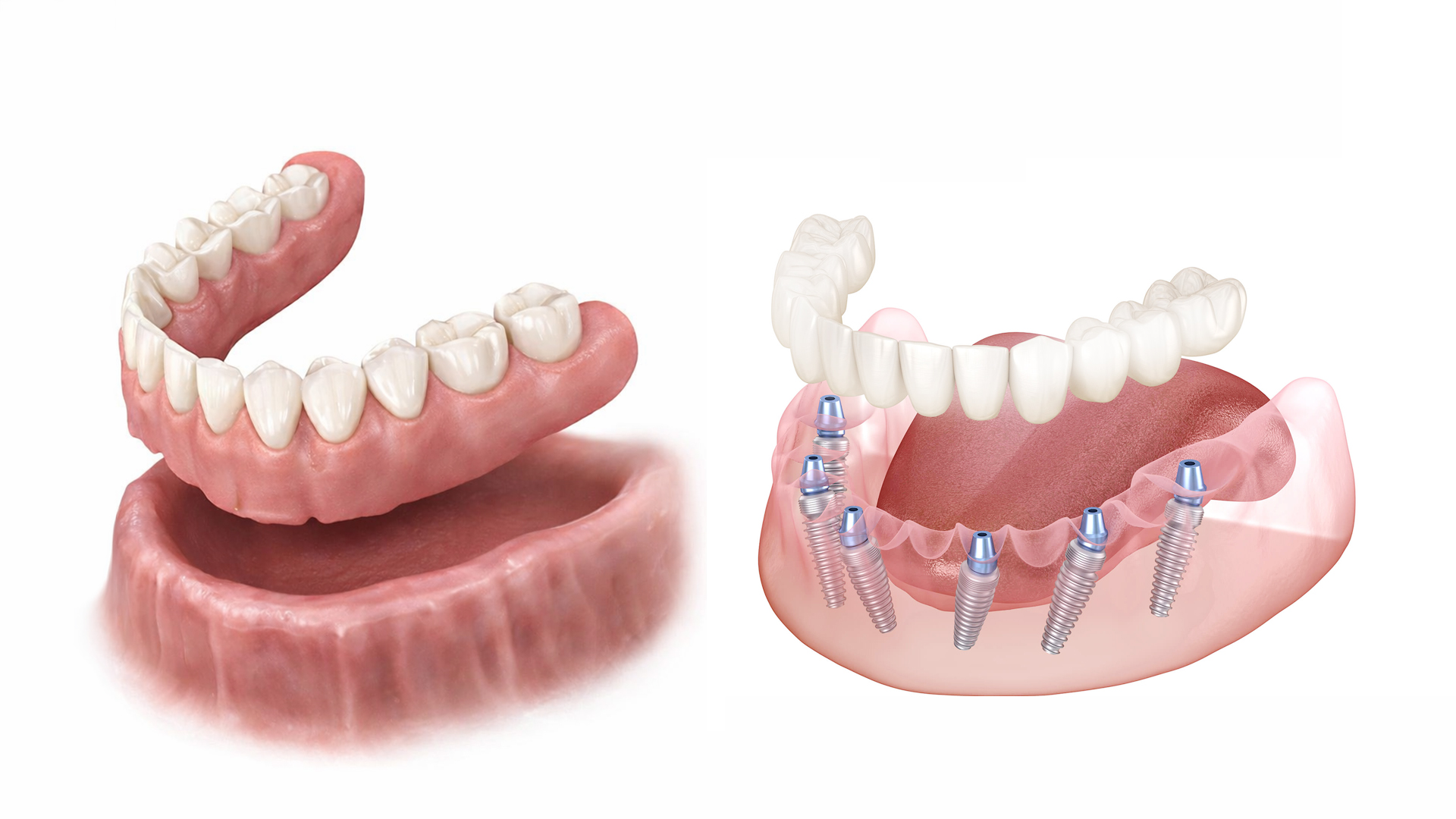
There’s a moment most denture wearers know well. You’re at a restaurant, looking at the menu, and instead of picking what sounds good, you’re picking what you can actually eat. Steak is out. Corn on the cob is out. Even a simple apple feels risky. Food becomes something you manage instead of enjoying.
That shift affects more than just your meals. When you can’t chew properly, your nutrition suffers. When you’re worried about slippage in front of friends or family, eating out stops being fun. Over time, a lot of people just quietly shrink their world to avoid the frustration.
Full arch dental implants promise to change that. But how much of a difference do they really make when it comes to everyday eating? This post breaks it down. We’ll compare bite force, food restrictions, comfort, taste, and long-term function between traditional dentures and full arch implants so you can make a decision based on real information, not just marketing claims.
Chewing Power and Bite Force: Dentures vs Full Arch Dental Implants
Bite Force Capabilities with Traditional Dentures
If you’re wearing removable dentures right now, you’ve probably noticed that eating doesn’t feel the same as it did with your natural teeth. There’s a scientific reason for that frustration. Research published in the PMC database shows that dentures restore only about 20 to 25 percent of your natural bite force. That’s it.
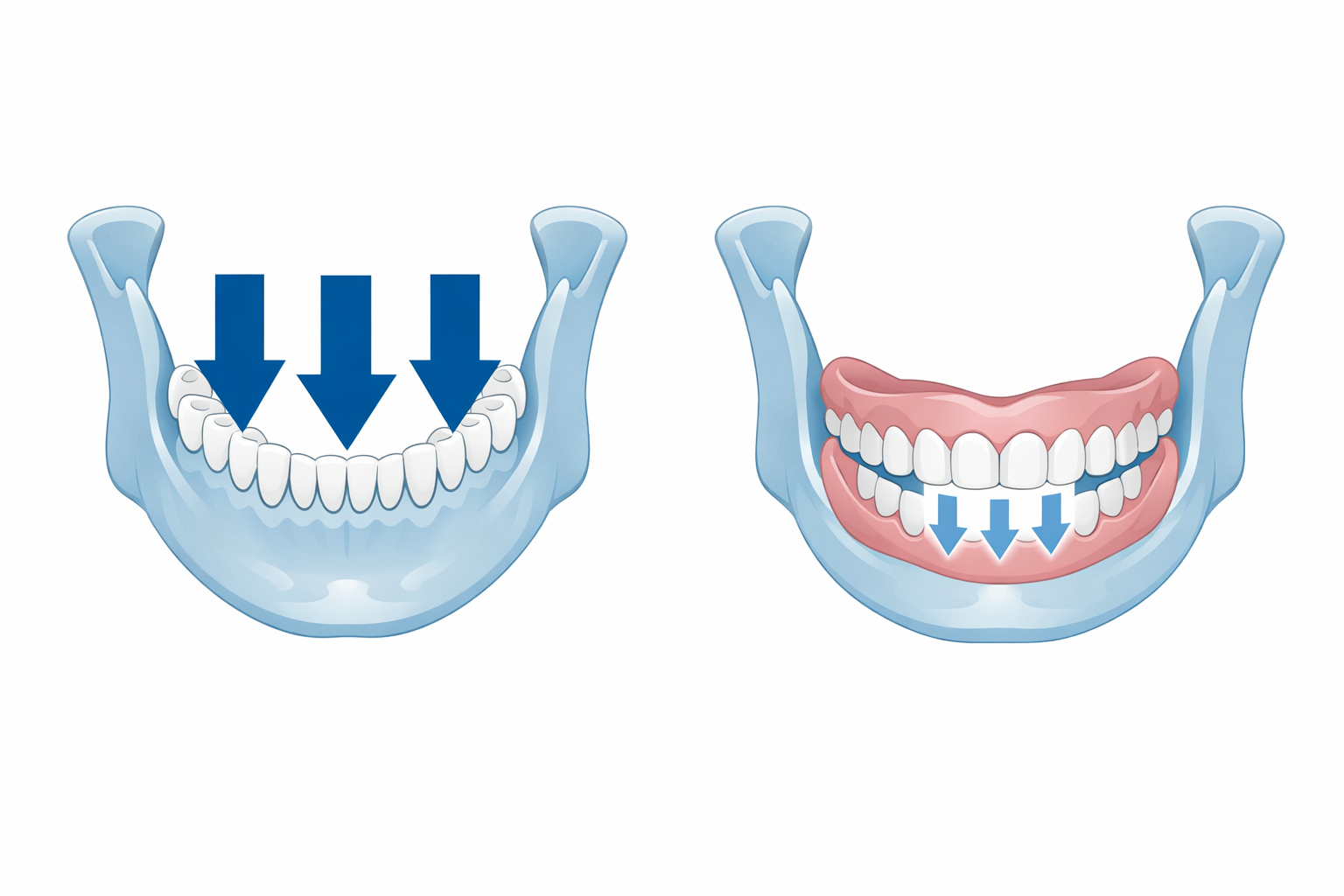
Think about what that means when you’re trying to bite into an apple or chew a piece of steak. Your natural teeth could generate somewhere between 200 and 250 Newtons of force. With dentures, you’re working with just 50 to 120 Newtons on average. You’re essentially trying to do a full job with a quarter of the tools.
Lower dentures create even bigger problems. Your tongue moves constantly when you eat and talk, which pushes against the denture and reduces stability. The lower jaw also has less bone support and no palate to create suction like the upper jaw does. This combination means your lower denture shifts around precisely when you need it to stay put. Many denture wearers end up relying almost entirely on their upper denture for chewing because the lower one just won’t cooperate.
Bite Force Restoration with Full Arch Implants
Full arch dental implants change the entire equation. Because they anchor directly into your jawbone, they restore 80 to 90 percent of your natural bite force. That’s not a small improvement over dentures. That’s a complete transformation.
The secret is osseointegration.
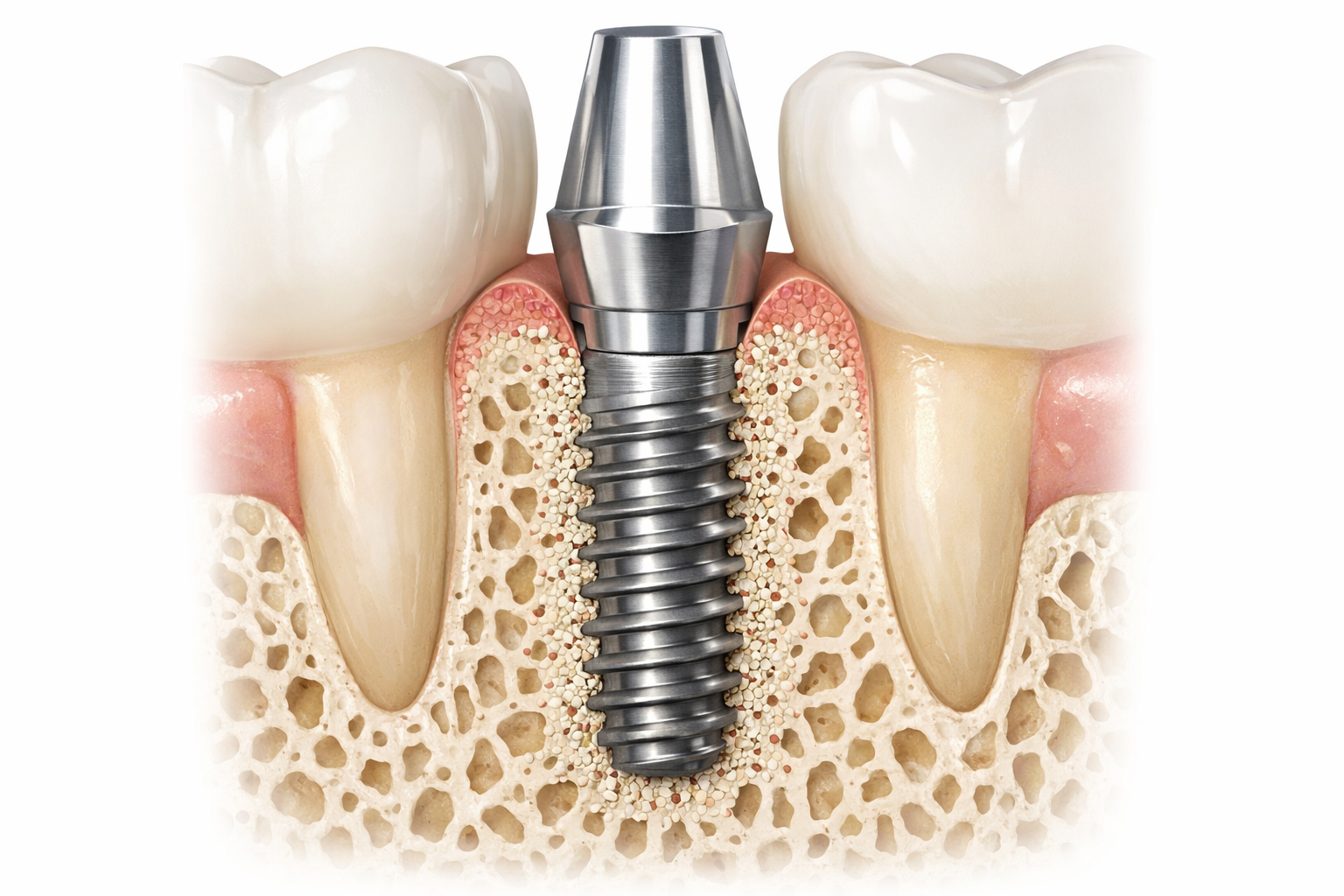 Your jawbone actually fuses with the titanium implants over several months, creating a permanent foundation that functions like natural tooth roots. Clinical research in the Journal of Dental Research demonstrates that patients typically achieve bite forces between 150 and 220 Newtons within six to twelve months after their full arch implant placement. Some patients get even closer to their original natural bite force.
Dentures sit on top of your gums and rely on suction, adhesive, or clips for retention. Every time you bite down, the force gets absorbed and dispersed through that cushioning layer of gum tissue. Full arch implants eliminate that mushy middle layer. The force transfers directly from the prosthetic teeth through the implants into your jawbone, just like your original teeth worked.
Real-World Chewing Efficiency Differences
The numbers tell one story, but your daily eating experience tells another. Studies from the ADA Science and Research Institute show that denture wearers require two to three times as many chewing strokes to break down the same amount of food as patients with dental implants. That’s exhausting. Your jaw gets tired, meals take longer, and you still don’t get food broken down as well as you should.
Patient satisfaction surveys reveal the real gap. Full arch implant patients report 85 to 95 percent satisfaction with their chewing ability. Denture wearers? Only 40 to 60 percent feel satisfied with how they can eat. More than half of denture patients are unhappy with something that’s supposed to be a basic daily function.
The grinding motion makes a huge difference, too. Implant-supported teeth let you chew side to side and front to back, creating that natural grinding action that properly breaks down food. Dentures mostly allow up-and-down movement without much lateral grinding capability. Your food ends up being crushed but not really chewed the way it should be.
Food Restrictions and Dietary Freedom with Each Option
Common Food Limitations with Removable Dentures
Anyone wearing removable dentures knows the frustration of watching others bite into a crisp apple while you’re stuck cutting everything into baby-sized pieces. Hard foods become your enemy. Raw carrots, nuts, crusty French bread, and fresh apples need to be avoided completely or chopped so small they barely resemble real food anymore.
Sticky foods create their own special nightmare. Caramel candies, taffy, peanut butter sandwiches, and gummy bears can yank your dentures right out of position at the worst possible moment. Even worse, these foods get trapped underneath your dentures, creating an uncomfortable mess that forces you to excuse yourself from the table to clean everything out.
Chewy meats present another major challenge. A nice medium-rare steak? Forget about it. Pork chops, beef jerky, and even some chicken dishes become nearly impossible to eat comfortably with dentures. You’ll spend so much time chewing that your jaw gets tired before you finish your meal.
Small seeds and grains slip under dentures and cause painful irritation against your gum tissue. Strawberries, sesame seeds on burger buns, and even quinoa or rice can work their way underneath and create inflammation that lasts for hours or days.
Expanded Food Choices with Full Arch Implants
Full arch dental implants completely change the game when it comes to food freedom. You can bite directly into a whole apple again. Corn on the cob becomes an option. Raw carrots, celery sticks, and other crunchy vegetables are back on the menu without any special preparation needed.
High-protein foods that were previously off-limits suddenly become accessible. Juicy steaks, barbecue ribs, and tough cuts of meat can be enjoyed just like you remember. The fixed stability of dental implants means you can actually tear and grind food the way your natural teeth used to work.
Crunchy and crispy textures are no longer a problem. Popcorn at the movies, potato chips at parties, crackers with cheese, and mixed nuts become perfectly safe to eat. No more worrying about breaking your dentures or having them pop out while you’re enjoying a snack.
Sticky foods also lose their terror factor completely. You can enjoy caramel apples, chew gum, eat peanut butter straight from the jar, and indulge in your favorite candy without any concerns about dislodging your teeth or creating a cleaning emergency.
Nutritional Impact of Food Restrictions
The food limitations created by dentures don’t just affect enjoyment. They impact your health. Denture wearers often develop nutritional deficiencies because they start avoiding fibrous vegetables and protein-rich meats that are too difficult to chew properly.
Research shows denture patients eat 15 to 20 percent fewer fresh fruits and vegetables compared to people with dental implants. That’s a significant gap that can lead to vitamin deficiencies, digestive problems, and weakened immune function over time.
Full arch implant patients maintain better overall nutrition and healthier body weights because they can eat whatever their bodies need. When you’re not limited by what you can physically chew, you make better dietary choices based on health rather than convenience. This unrestricted eating ability contributes to better cardiovascular health, stronger bones, and improved energy levels across the board.
Comfort, Stability, and Eating Confidence Comparison
Denture Movement and Slippage During Eating
Here’s something most denture wearers know all too well: even perfectly fitted dentures move during meals. Clinical studies show that conventional dentures can shift 1 to 2 millimeters with each bite, creating constant uncertainty about whether your teeth will stay put.
That might not sound like much, but when it happens with every chew, it becomes exhausting to manage.
Lower dentures create even more headaches. Your tongue naturally pushes against the denture when you eat, and since there’s minimal suction holding the lower plate in place, it lifts and rocks with frustrating regularity. Every bite of a sandwich becomes a careful calculation rather than an enjoyable experience.
Many people turn to adhesive creams for help, and they do provide some relief initially. The problem? Hot coffee dissolves the adhesive. Soup loosens it. By the time you’re halfway through dinner, you’re back to dealing with movement and instability. Some denture wearers reapply adhesive multiple times throughout a single meal just to maintain basic function.
The movement causes more than just inconvenience. When your denture rubs against the same spots repeatedly, sore patches and ulcerations develop on your gum tissue. These painful areas make eating even more uncomfortable, creating a cycle where you avoid certain foods not because you can’t chew them, but because the pain isn’t worth it.
Fixed Stability of Full Arch Implant Restorations
Dental implants change everything about stability. They don’t move at all. Not during the first bite of an apple. Not during a tough steak. Not ever. Four to six titanium implants anchor into your jawbone and create a foundation that functions exactly like natural tooth roots.
The implants fuse directly with your bone through osseointegration, which basically means your body accepts them as permanent structures. Once the full arch restoration attaches to these implants, you have teeth that stay exactly where they should be throughout every meal.
No adhesive tubes cluttering your bathroom counter. No mid-meal bathroom trips to rinse trapped food particles. No nervous laughter when someone suggests biting into corn on the cob at a summer barbecue. Patients consistently report that eating with dental implants feels like getting their original teeth back, and the confidence shift is remarkable.
Taste Perception and Eating Enjoyment
Traditional upper dentures cover your entire palate with acrylic material.
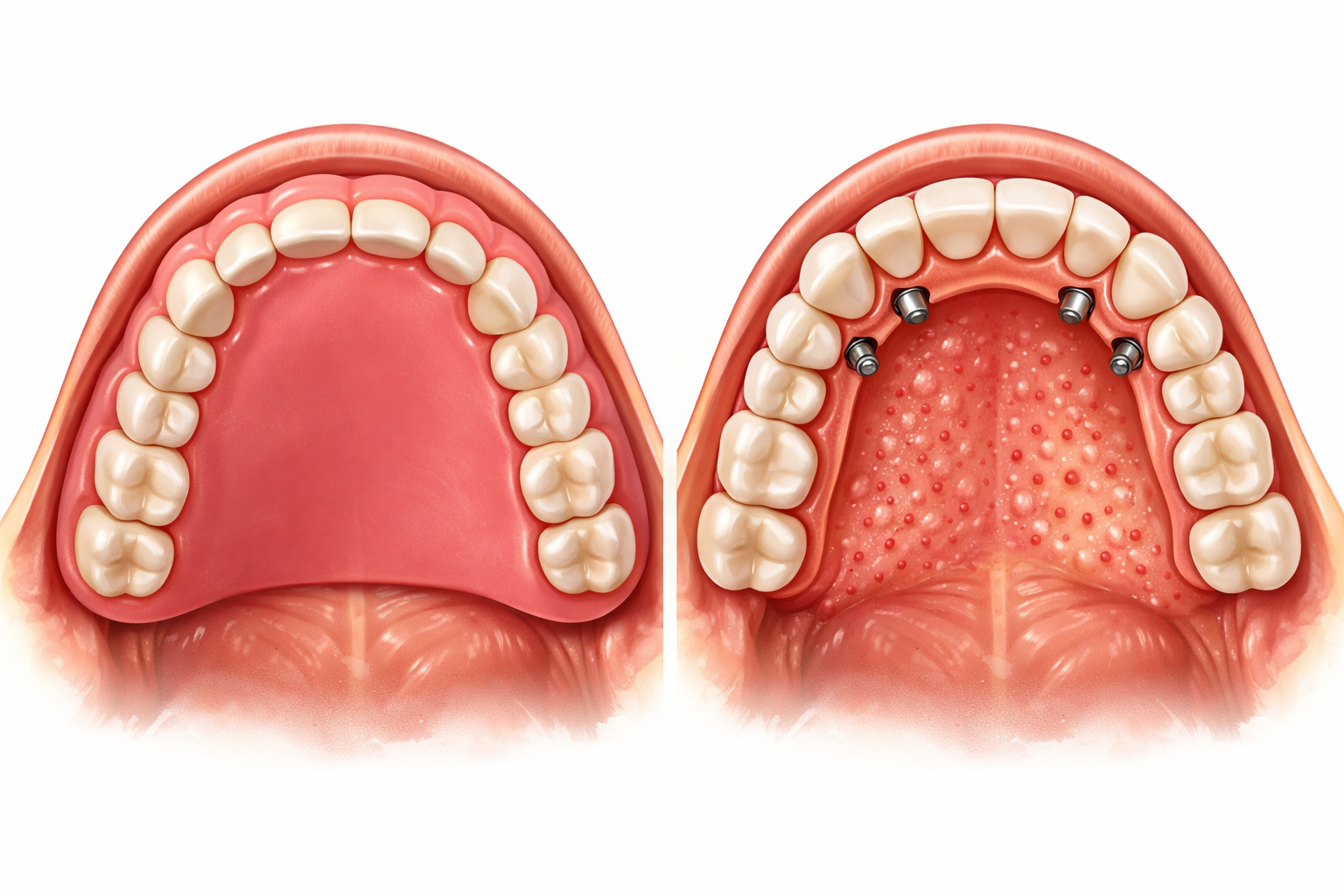 This blocks a huge percentage of your taste receptors, somewhere between 40 and 60 percent depending on the design. Food simply doesn’t taste as vibrant or flavorful when that much of your palate is covered.
Full arch implants on your upper jaw can be designed without any palate coverage whatsoever. Your taste buds remain fully exposed. The difference is dramatic when you first eat without that barrier, something many patients describe as rediscovering flavors they’d forgotten.
Temperature matters too. Hot coffee, ice cream, warm soup. These sensations get muted with dentures but come back fully with implants. You can actually feel temperature changes again, which adds another dimension to eating pleasure.
Beyond the physical aspects, there’s the mental relief. When you stop worrying about whether your teeth will slip during dinner, you actually enjoy the social experience of sharing meals. The anxiety melts away, and eating becomes purely about flavor and company rather than constant monitoring.
Social Eating and Quality of Life Impact
Many denture wearers quietly avoid restaurants and dinner parties. The anxiety about teeth slipping during conversation or being unable to eat what everyone else orders becomes overwhelming. It’s easier to decline invitations than to face potential embarrassment.
Research shows that patients who receive full arch implants report approximately 90 percent improvement in their confidence during social dining situations. They order what looks good on the menu instead of scanning for soft options. They laugh freely without worrying about denture movement. They accept dinner invitations enthusiastically rather than making excuses.
The psychological benefits extend far beyond mealtimes. Studies tracking dental implant recipients show marked improvements in overall self-esteem and willingness to engage in social interactions. When you’re not constantly self-conscious about your teeth, you participate more fully in life. You smile more openly. You speak more confidently. These changes ripple through every aspect of daily living, investing in implants for far more than just improved chewing function.
Long-Term Eating Experience and Maintenance Considerations
Progressive Bone Loss Impact on Denture Eating Ability
Your jawbone needs stimulation to stay healthy. When you lose your natural teeth and start wearing dentures, that stimulation disappears. The result? Your bone starts to shrink away. Research shows that the jawbone can deteriorate by 25 to 40 percent in just the first year after tooth loss when you’re wearing conventional dentures.
This bone loss doesn’t stop after year one. It continues throughout your life. As your bone recedes, your dentures begin to fit worse and worse. What started as a comfortable fit gradually becomes loose and unstable. You’ll find yourself going back to the dentist for adjustments and relines more frequently. Each time, they’re trying to compensate for bone that’s no longer there.
After 5 to 10 years of wearing dentures, the bone loss can become severe. Lower dentures, especially, become nearly impossible to stabilize for comfortable eating. You’re fighting a losing battle. The gum tissue that remains becomes thin and sensitive. The combination of ongoing bone loss and gum recession creates a frustrating cycle where your eating ability gets worse every year.
Bone Preservation and Stable Function with Full Arch Implants
Dental implants work completely differently. They function like artificial tooth roots that fuse directly with your jawbone through a process called osseointegration. This fusion does something remarkable. It actually stimulates the bone, keeping it alive and healthy. Studies demonstrate that dental implants preserve 90 to 95 percent of bone density over the long term.
Your chewing function stays consistent for decades. Unlike dentures that get progressively worse, implants prevent the bone resorption that causes all those problems. You can expect the same strong bite and eating ability 10 years down the road as you had after healing. Your facial structure stays intact, too. You won’t develop that sunken, aged appearance that comes from years of bone loss under dentures.
With proper care, full arch implants provide a predictable, stable eating ability for 20 years or more. Many patients have implants that last even longer.
Daily Maintenance Impact on Eating Convenience
Dentures disrupt your entire eating routine. You need to remove them, clean them thoroughly, and reapply adhesive before meals. Sounds manageable, right? But here’s what actually happens. Food particles get trapped underneath while you’re eating. The discomfort builds. You excuse yourself mid-meal to remove your dentures, rinse them, clean your gums, and put everything back together. Professional dental care resources confirm this is a common daily frustration for denture wearers.
Full arch implants eliminate all of that hassle. You brush and floss them exactly like natural teeth. No removal. No special soaking solutions. No adhesive tubes cluttering your bathroom. You sit down to eat and simply eat. The convenience of permanent teeth means you spend your time enjoying meals instead of managing dental appliances.
Cost-Benefit Analysis for Eating Quality
The price tag on full arch implants gives many people sticker shock. $15,000 to $30,000 per arch isn’t pocket change. Dentures look much more affordable initially at $1,500 to $4,000. But let’s look at the real numbers over time.
Dentures need replacement every 5 to 7 years. You’ll also spend money on adhesive creams, cleaning solutions, adjustment appointments, and periodic relines. Over 20 years, you’re looking at multiple denture sets plus all those ongoing costs. The lifetime expense adds up faster than most people realize.
Health policy research from the ADA shows that when you calculate total costs over two decades, the difference between dentures and implants narrows considerably. If eating quality and daily convenience matter to you, implants deliver substantially better value despite that higher upfront investment. You’re paying once for a solution that actually solves the problem instead of repeatedly paying for something that gets worse over time.