
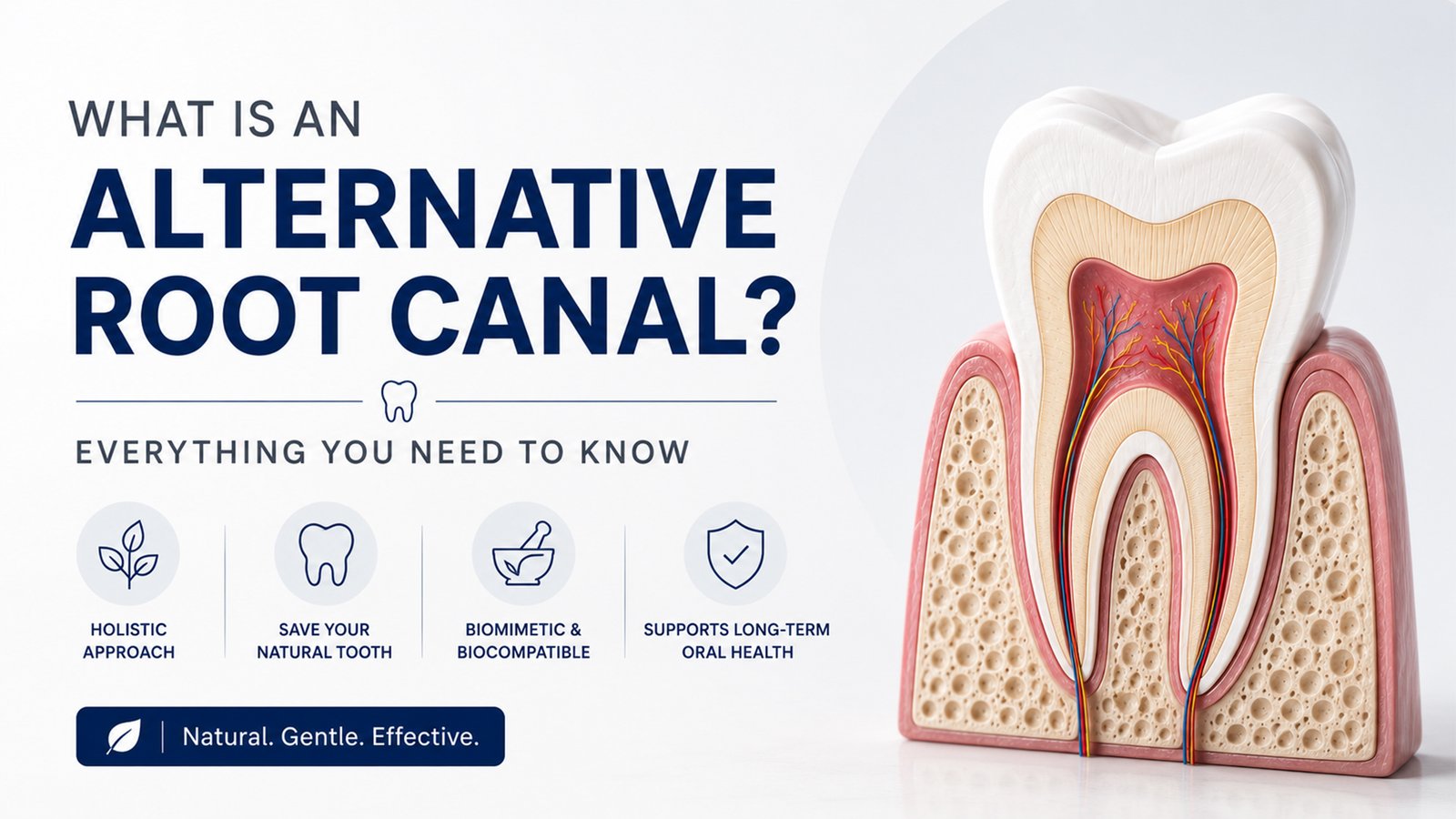
If you have experienced a toothache and been advised to undergo a root canal, you may have considered alternative options. Many patients share concerns about root canal procedures due to their negative reputation.
Fortunately, there are more alternatives to root canal treatment than many patients realize. At Premiere Dental, our primary objective is to educate you about all available options so you can make an informed decision that best supports your oral health and overall well-being.
This guide explains what a root canal is, when it is an appropriate treatment, and how to discuss your options with your dentist. Whether your goal is to preserve your tooth, manage pain, or better understand your dental health, this resource provides a comprehensive starting point.
What is a Root Canal?
A Root Canal is a dental procedure, which is also known as an endodontic procedure. This procedure is designed to save the infected tooth. The procedure involves removing the inflamed or infected pulp (the soft center containing nerves and blood vessels) from inside. Then the tooth is cleaned, disinfected, and sealed back to prevent any further damage.
Why is a root canal needed?
A root canal is needed to remove the inflamed or infected pulp and rescue your natural tooth. This procedure includes removing the damaged nerve, cleaning the canals, and securing your natural tooth.
Key symptoms to look for, if you need an endodontic procedure:
If you notice any of these signs, it is highly recommended to consult your dentist or an endodontist.
- Toothache: Continuous pain in your tooth that keeps you awake at night, or even increases when you bite or chew.
- Dental Sensitivity: A sharp pain that continues for seconds or minutes after consumption of hot or cold food and beverages.
- Gum Pimples: Small bumps or boils on your gums that may ooze pus.
- Swelling and Tenderness: Swollen or dark-looking gums or swelling of a jaw in the affected area.
- Tooth Discoloration: Change of the tooth color compared to your surrounding teeth.
Why do patients want alternatives?
Patients mainly seek alternatives to root canal treatments due to dental anxiety, cost barriers, holistic health philosophies, and structural concerns. Nowadays, organizations such as the American Association of Endodontists emphasize that modern root canals are safe and routine.
Alternative treatment options for Root Canal Treatment
Having reviewed the definition, indications, symptoms, and reasons patients seek alternatives to root canal treatment, the following section outlines alternative treatment options.
Alternative 1: Pulp Capping
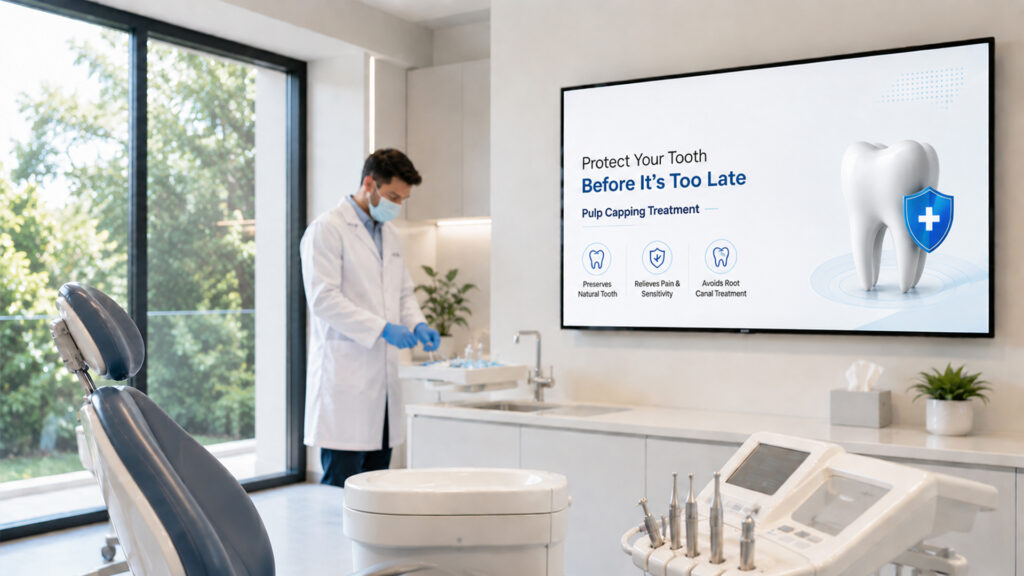
Pulp Capping is a treatment used to protect the inner nerve complex (pulp) of a tooth. Its primary goal is to preserve the tooth’s natural vitality and prevent the need for root canal treatment. This treatment is further divided into two types: 1. Direct Pulp Capping and 2. Indirect Pulp Capping.
Direct Pulp Capping (DPC):
This procedure is necessary if a small opening is visible in the tooth and leads right into the nerve chamber, due to a deep cavity, a physical injury, or accidental dental drilling.
Process: The dentist thoroughly removes them from your teeth. Once any minor bleeding has been dealt with, a biocompatible substance is directly applied onto the exposed nerve tissue.
The Goal: To encourage the pulp to regenerate a protective barrier of secondary dentin (dentin bridge) covering the exposed site.
Indirect Pulp Capping (IPC):
Extremely deep decay without involvement of the nerve chamber is treated with this conservative method.
The Process: To avoid drilling through a healthy nerve, the dentist leaves a very thin, firm layer of affected dentin over the pulp chamber. This remaining tooth structure is then covered with a protective, medicated lining before the tooth is sealed.
The Goal: To exclude potentially harmful bacteria and eliminate sources of food for bacteria. This allows the underlying pulp to heal and, of course, hardens the defense wall over time.

Key differences between DPC and IPC:
| Feature | Direct Pulp Capping (DPC) | Indirect Pulp Capping (IPC) |
| Pulp Status | Directly Exposed | Unexposed |
| Main Cause | Mechanical Trauma or removal of deep caries | Deep tooth decay is very close to the nerve |
| Material Placement | Applied directly to the exposed pulp tissue | Applied over the remaining thin dentin floor |
| Success Rate | Lower (roughly 23% – 84%) | Higher (generally 90% or above) |
Alternative 2: Tooth Extraction + Implant / Bridge
Tooth extraction is indicated when the tooth structure becomes brittle, fractures, or develops recurrent infections. The procedure involves anesthetizing the area, loosening the tooth with specialized instruments, and safely removing it from the socket. Replacing an extracted tooth with an implant or bridge restores function and prevents adjacent teeth from shifting. The following outlines key differences between dental implants and dental bridges:
| Features | Dental Implant | Dental Bridge |
| Surgical Need | Requires oral surgery | Completely Non-Surgical |
| Impact on Adjacent teeth | Zero damage to the surrounding teeth | Shaves down healthy neighbor teeth |
| Bone loss prevention | Stimulates and preserves the jawbone | Bone beneath the gap slowly shrinks |
| Average Longevity | Lasts a lifetime with good oral hygiene | Lasts 5 to 15 years |
| Total Treatment time | 3 to 6+ months for bone healing | 2 to 3 weeks from start to finish |
Key factors for your decision:
Choose a Dental Implant if:
- You need a lasting, permanent solution that helps preserve your natural jawbone structure.
- The adjacent teeth are all good, and you don’t want to bite them off.
Choose a Bridge If:
- You need a quick cosmetic replacement and do not want to undergo oral surgery.
- The adjacent teeth also have large fillings or decay and would otherwise need protection.
- Your bone loss may be very pronounced in your mouth, and without such surgeries, you wouldn’t even be able to get an implant.
Alternative 3: Apicoectomy
An Apicoectomy, also known as root-end surgery, is a surgical procedure in which a tooth’s root tip is removed and a root-end cavity is prepared and filled with a biocompatible material. If regular root canal treatment has failed and re-treatment is not recommended, an apicoectomy might be required. The root tip should be removed when the entire apical delta is removed to ensure no anatomy is missed. The only other option is to have the tooth extracted and replaced with a denture, a dental bridge, or a dental implant.
Reported success rates for apicoectomy vary due to differences in study design and materials used. A 2010 meta-analysis found that modern surgical endodontic treatment has an overall success rate of 85-95%. A 2009 systematic review reported success rates for surgical endodontics of 77.8% at 2-4 years, 71.8% at 4-6 years, and 62.9% at more than 6 years. Multiple factors influence the likelihood of a successful apicoectomy. When performed correctly, this procedure can be highly effective in preserving teeth that might otherwise require extraction.
Alternative 4: Ozone therapy
Ozone therapy is a holistic alternative treatment that utilizes medical ozone (O3) to enhance oxygen delivery to cells. It is promoted as a complementary approach for wound healing, pain relief, immune system support, and anti-aging. However, this practice remains controversial due to limited evidence regarding its safety and efficacy.
How It Works
Ozone is an unstable, highly reactive form of oxygen. At appropriate doses, it is a biological response modifier.
- Cellular Metabolism: Increases production of cellular energy (ATP) by stimulating the Krebs cycle.
- Antioxidant activation: Triggers a moderate oxidative stress response, leading to the synthesis of endogenous antioxidant enzymes (e.g., glutathione and SOD).
- Immune Regulation: It helps to strengthen the immune system by stimulating white blood cells and regulating inflammatory markers.
Safety and Regulations
Official health organizations, such as the U.S. FDA, have also stated that ozone gas should not be used for any medical treatment. Ozone is unstable and can have adverse effects if administered at the wrong concentration, leading to vein irritation, respiratory problems, or organ damage. The Wikipedia Ozone Therapy Overview provides a more general summary of the medical skepticism surrounding ozone therapy.
Availability and Cost
Ozone therapy is primarily available at naturopathic clinics, holistic wellness centers, and some integrative medicine centers. It is often incorporated into naturopathy and Ayurvedic hospitals in areas such as India. The price of each session usually ranges from ₹30 to ₹6,000, depending on the health requirements and the procedure performed.
Alternative 5: Antibiotics / Pain mgmt
Tooth infection is not cured by antibiotics alone, nor is it enough for the toothache pain to go away. If there are any systemic symptoms, such as fever or facial swelling, systemic oral antibiotics should be used. For patients who would prefer an alternative to a standard root canal, pain and infection management are managed through certain clinical procedures, over-the-counter remedies, or other dental surgeries.
Pain Management Protocols
The pain from a tooth is mainly caused by acute inflammation in the hard, enclosed chamber of the tooth.
- First-Line NSAIDs: The best treatment for dental nerve pain is the Non-Steroidal Anti-Inflammatory Drugs (NSAIDs) in the first-line category. Common medication prescribed by a dentist includes Ibuprofen (Advil/Motrin), which is usually used as needed.
- Combination Therapy: If NSAIDs are not sufficient to control pain, they can be taken with Acetaminophen (Tylenol) for the additional pain-relieving properties.
- Topical Gels: Gels containing benzocaine are available over the counter and provide only temporary, surface-level numbness; they do not treat nerve pain.
Use of Antibiotics (Systemically Indicated)
The American Dental Association (ADA) and the American Association of Endodontists (AAE) recommend using antibiotics for localized acute abscesses with systemic manifestations (fever, malaise, rapid swelling).
- Amoxicillin: This is the preferred antibiotic for an infection that is spreading through the tooth, and is occasionally combined with clavulanic acid, which provides enhanced resistance to the drug.
- Clindamycin or Azithromycin: These are standard alternatives if you are allergic to penicillin.
Conclusion
There is no universally correct approach to treating a tooth infection. Options may include pulp capping to preserve the nerve, an implant to replace a non-restorable tooth, or a modern root canal to alleviate pain efficiently. The optimal treatment is one chosen with comprehensive information and confidence in your dental provider.
This guide aims to clarify your available options. Treatment decisions should never feel rushed, pressured, or inadequately explained.
At Premiere Dental, we are committed to thoroughly explaining your dental condition, recommended actions, and the rationale behind our suggestions. Our approach eliminates uncertainty, technical jargon, and undue pressure.
Ready to Talk to a Dentist Who Actually Listens?
If you are experiencing toothache, sensitivity, or have been advised to undergo root canal treatment but are uncertain about your next steps, we can assist you. Schedule an appointment at Premiere Dental to have your X-rays reviewed and to discuss your treatment options, ensuring you feel confident in your decision.