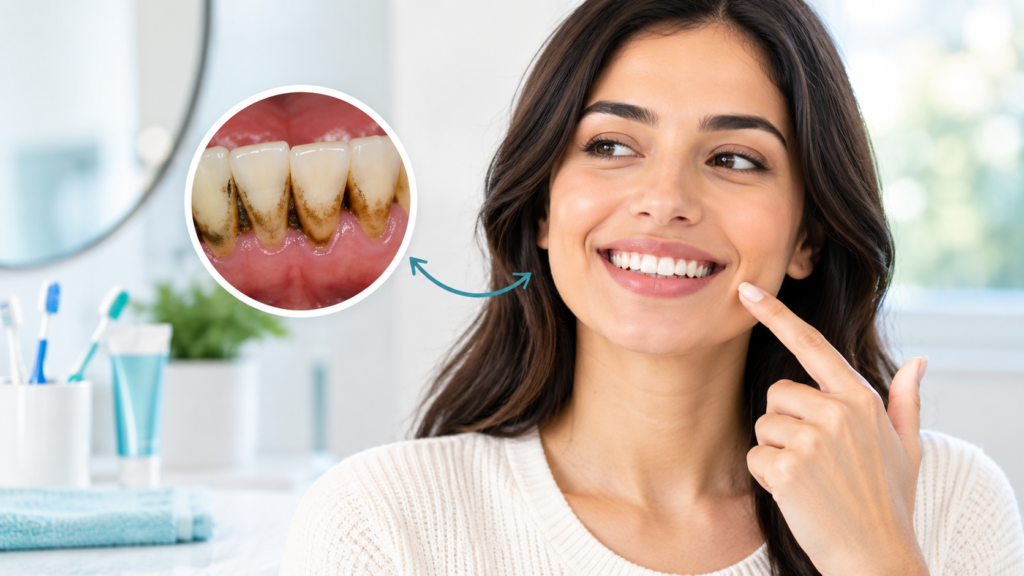

On a hot afternoon, you grab a glass of ice water, take a drink, and then it strikes. One tooth hurts with a “zingy” sensation, and you wince when you bite into it. Perhaps it fades in a few seconds. Or you dismiss it and go about your day.
If this sounds familiar, you’re not alone. One of the most common reasons people book a dentist appointment is cold sensitivity. It’s also one of the most overlooked symptoms because it may go away and seem insignificant.
Your teeth aren’t being melodramatic. That pain is a message, and sometimes a very useful one. Let’s look at what’s happening, what it may indicate, and when you should see a dentist instead of waiting and watching.
Why Do Cold Drinks Make Your Teeth Hurt?
Learning about what is in your tooth will help you to understand the pain.
Each tooth has several layers. The hard, protective outer layer is called enamel. Below it is dentin, which is softer than enamel and contains thousands of very small channels called tubules. The pulp sits at the center and contains nerves and blood vessels.
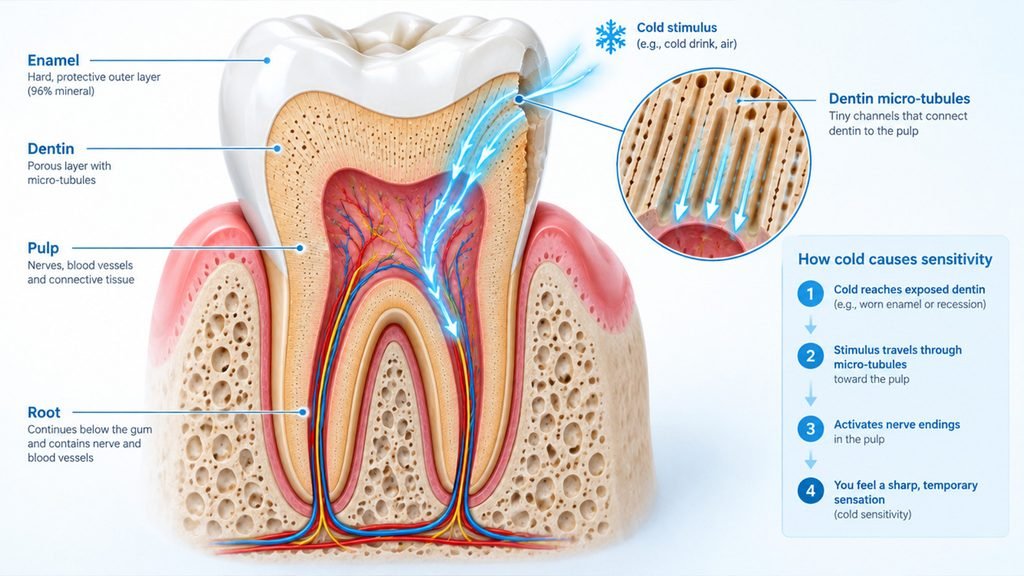
Healthy enamel and healthy gums that cover the roots protect the nerve. Cold drinks barely register. However, when enamel wears away, or the gum line recedes, the tiny channels in the dentin become exposed. They conduct cold into the nerve within and stimulate it. This can produce a fast, sharp “ouch” feeling.
When a cold drink causes a toothache, it likely means the tooth’s natural defenses are lessened or weakened. What is it?
Common Causes of Tooth Sensitivity to Cold
1. Worn Enamel
Enamel is the hardest material in your body, but it’s not indestructible. Over time, it wears down, and there are a number of things you do daily that help it wear out faster:
- Frequent acidic foods and drinks, like fizzy drinks, citrus, energy drinks, and wine
- Brushing too hard or with a stiff-bristled brush
- Sipping sugary or acidic drinks throughout the day instead of all at once
- Acid reflux, which brings stomach acid up into the mouth
When a tooth’s enamel wears away, your body can’t replace it. Early detection of erosion is important.
2. Receding Gums
Gums protect the roots of your teeth. Roots don’t have enamel; they’re covered by a thinner material that wears away easily. Receding gums, whether from gum disease, excessive brushing, or age, expose the roots, which can become very sensitive to temperature.
Receding gums usually start slowly, so many people may not notice a problem until their teeth start to feel sensitive. Tell your dentist if your teeth appear longer than they used to.
3. Tooth Decay (Cavities)
A cavity is a hole in a tooth that lets heat or cold reach the tooth’s sensitive parts. Early cavities usually don’t cause pain, and one of the first signs of decay is sensitivity to cold. The sooner you can discover it, the easier and cheaper the repair is likely to be.
4. Cracked or Chipped Teeth
Sometimes a crack is so small you can’t even see it, but it can let in cold and cause pain. Cracks often cause sharp, sudden pain. You may feel it when biting down or when something cold touches that tooth. Don’t ignore cracked teeth; they will only worsen over time.
5. Old or Damaged Fillings
Fillings don’t last forever. They may wear down or loosen over time, creating a small gap around the edges. Bacteria and temperature changes can then invade the gap. That may be why a tooth with a filling feels sensitive.
6. Teeth Grinding (Bruxism)
Many people clench or grind their teeth at night without realizing it. Over time, grinding erodes enamel and can lead to small fractures. Symptoms include jaw pain, headaches, or teeth that look flat.
7. Recent Dental Work or Whitening
Temporary tooth sensitivity after a filling, cleaning, or whitening procedure is normal. Recovery typically takes a few days to a couple of weeks. If it doesn’t fade or gets worse, tell your dentist.
8. An Infection or Nerve Problem
The issue isn’t always that simple. When decay or a crack reaches the pulp, the nerve may become inflamed or infected. If so, the pain may persist long after the cold passes, or it may occur without an obvious cause. It is not something that should be delayed.
Normal Sensitivity vs. a Warning Sign
Not all cramps are considered emergency cramps. However, certain patterns are worth watching for. Here’s a simple way to tell the difference.
| What You’re Noticing | Usually Normal | Warning Sign |
| How long the pain lasts | A quick flash that fades within a few seconds | Lingers for more than 30 seconds after the cold is gone |
| Where you feel it | Mild, occasional, spread across several teeth | Focused on one specific tooth |
| When it happens | Only when something cold touches your teeth | When biting or chewing, or on its own with no trigger |
| Night-time pain | Doesn’t disturb your sleep | Wakes you up at night |
| After dental work | Began right after a cleaning or whitening session and is slowly improving | Doesn’t improve or keeps getting worse after a couple of weeks |
| What you can see | Teeth look normal | A visible hole, chip, or dark spot |
| Gums and face | No change | Swelling in the gums or face |
Seek dental care immediately if you have any swelling, fever, or severe pain.
The reality is that you can’t tell what’s wrong by looking at yourself. Two people can have the same symptom for completely different reasons, and the right treatment depends on the cause.
What Will Your Dentist Do About It?
Many people avoid making an appointment because they assume the worst. In fact, the cause of sensitivity is usually easy to determine.
During your appointment, your dentist will likely:
- Ask about your symptoms. When does it hurt? Which tooth? How long does the pain last? These details help narrow things down quickly.
- Examine your teeth and gums. Look for decay, cracks, worn enamel, gum recession, and damaged fillings.
- Take X-rays if needed. These show what’s happening beneath the surface, including cavities between teeth and root issues.
- Recommend a treatment plan. This depends on the cause.
Treatment may be necessary and include:
- Desensitizing toothpaste or in-office treatments to help block the exposed tubules and calm the nerve
- Fluoride applications to strengthen weakened enamel
- Dental bonding or sealants to cover exposed root surfaces
- Fillings or replacement of old fillings to treat decay or restore damaged areas
- A custom night guard if grinding is the culprit
- Gum treatment if gum disease or recession is involved
- Root canal therapy in cases where the nerve is infected or severely damaged
The good news is that most causes of sensitivity are treatable, especially if caught early.
What You Can Do at Home in the Meantime
You can take a few simple steps to relieve discomfort while you wait for your appointment. These aren’t a replacement for a trip to the dentist, but they can help to make life easier.
- Switch to a toothpaste made for sensitive teeth. Use it consistently, since it often takes a couple of weeks to notice a difference.
- Use a soft-bristled toothbrush. Brush gently, in small circles, rather than scrubbing back and forth.
- Go easy on acidic foods and drinks. If you do have them, drink water afterward rather than brushing right away. Acid temporarily softens enamel, so wait about 30 minutes before brushing.
- Use a straw for cold drinks. It helps the liquid bypass your most sensitive teeth.
- Don’t skip flossing. Healthy gums better protect your tooth roots.
- Try a fluoride mouth rinse that’s alcohol-free, since alcohol can irritate sensitive areas.
- Avoid extreme temperature swings, like a piping-hot coffee followed by an ice-cold drink.
Don’t take the “ignore it and it will pass” strategy. Untreated sensitivity can develop into a more serious issue.
Why a Family Dentist Is Worth Having
When it comes to visiting a dentist, many people only go when there is a problem. However, that can be different with a family dentist.
A family dentist gets to know your teeth over time. They know your normal and can notice when something is different. To you, it may seem like a coincidence, but to your dentist, it may make perfect sense after seeing your gums, enamel, and fillings over several visits.

Not to mention the convenience. Whether you’re taking children for their first visit or seeing grandparents with dentures or crowns, a family dentist can care for everyone. Sensitivity can affect people of every age, from children with new adult teeth to teenagers with braces, adults who grind their teeth, and older adults experiencing gum recession. It is easier and less stressful to have one practice that understands all stages of life.
Also, if a person is afraid of the dental practitioner, a familiar face can make a difference. If you trust the person in the chair, you’re more likely to come in on time, ask questions, and get things fixed before they become a huge problem.
Myths About Tooth Sensitivity
A lot of well-meaning advice floats around about sensitive teeth, and some of it can make things worse. Here are a few myths worth clearing up.
Myth: “Sensitive teeth are just a part of getting older.”
Sensitivity becomes more common with age, mostly because gums recede and enamel wears down over time. But you don’t have to live with it. There’s always a cause, and most causes can be treated.
Myth: “Brushing harder keeps teeth cleaner.”
It does the opposite. Scrubbing hard wears away enamel and pushes gums back, which is exactly how sensitivity starts. A soft brush, gentle technique, and two minutes twice a day will do far more good.
Myth: “If the pain goes away, the problem is gone.”
Not necessarily. Sensitivity can come and go even while decay or a crack is quietly getting worse. A tooth that stops hurting isn’t always healthy, so a pain-free week isn’t a reason to skip your check-up.
Myth: “I’ll just avoid cold drinks.”
That might spare you the zing, but it doesn’t fix the cause. Avoiding the trigger and treating the cause are two very different things.
Sensitivity at Every Age
One reason a family dentist is so valuable is that tooth sensitivity looks different for everyone in the house.
Children: Kids can feel sensitivity when baby teeth loosen, new permanent teeth come in, or early cavities form. Because children often can’t explain what they feel, a parent might only notice them avoiding ice cream or pushing a cold drink away.
Teenagers: Braces, whitening products, and sugary or fizzy drinks are all common triggers. Teens also tend to brush either too little or too aggressively.
Adults: Stress-related grinding, old fillings, and early gum recession tend to show up in adulthood, often without much warning.
Older adults: Years of wear can expose tooth roots, and gum recession is especially common. Some medications that cause dry mouth can also increase the risk of decay, which can lead to sensitivity.
The signs differ, but the advice is the same at every stage: don’t wait for the pain to get worse before getting it checked.
Don’t Let a Cold Drink Be the Warning You Ignore
Sensitive teeth aren’t just inconvenient; they can also alert you. Your body is telling you something has shifted, whether that’s thinning enamel, a spreading cavity, or a shifted gum line. The sooner you can identify which one it is, the sooner you can fix it.
When drinking cold beverages begins to cause dental pain, it is not enough to simply avoid ice and wait; take steps to manage the pain. Schedule an appointment with a reputable dentist for a comprehensive exam to find the cause.
Our team at Premiere Dental offers comprehensive dental care for the whole family, from checkups to sensitivity treatment and beyond. Call us today or schedule an appointment online. A comfortable, confident smile shouldn’t require a trip to the iced tea stand.