

Let’s be honest. Most of us put off calling the dentist when we don’t have insurance. It’s not that we don’t care about our teeth. The bill feels like a mystery until the very end, and nobody enjoys opening that envelope.
If that sounds familiar, you’re far from alone. Millions of people go without dental coverage, and many of them quietly skip checkups for a year or two, then three. The trouble is, a small problem you could have caught early can turn into a bigger, pricier one while you’re not thinking about it.
So let’s take the mystery out of it. Below, we’ll walk through what a routine dentist visit may cost when you pay out of pocket, why the numbers shift from one office to another, and a few simple ways to lower the total. These are general ranges, not a quote, but they’ll give you a realistic picture before you pick up the phone.
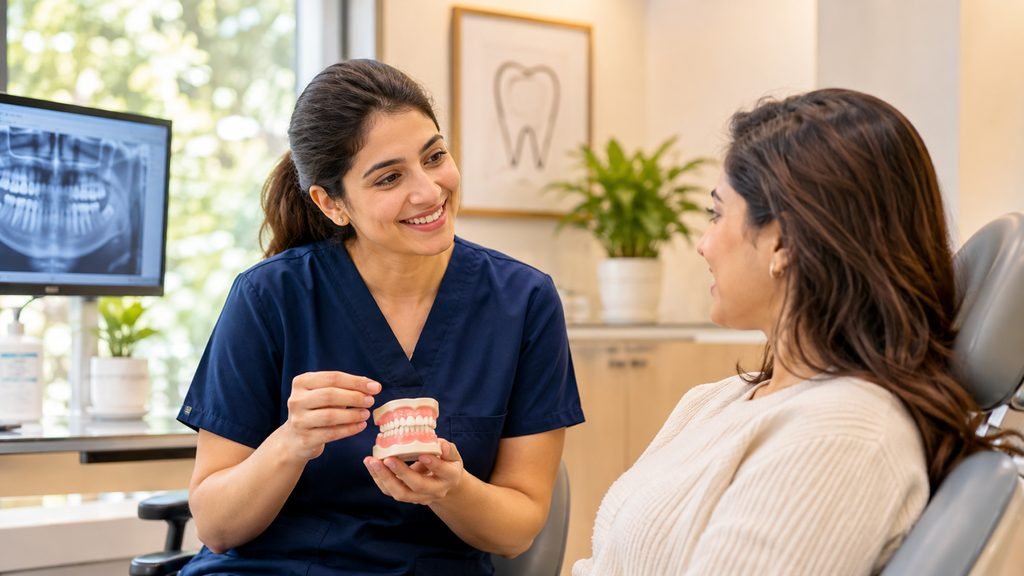
What Actually Counts as a “Routine” Dental Visit?
When people say routine visit, they usually mean the twice-a-year appointment your dentist recommends to keep things healthy. It typically has three parts:
- A checkup (exam): The dentist looks over your teeth, gums, tongue, and the rest of your mouth for cavities, gum trouble, or anything that looks off.
- A cleaning: A hygienist removes plaque and tartar that brushing and flossing can’t fully reach, then polishes your teeth.
- X-rays: Taken every so often, not at every visit, so your dentist can see what’s happening below the surface.
Sometimes a fluoride treatment gets added, especially for kids or for adults who are prone to cavities. That’s pretty much it. No drilling, no surprises, just maintenance.
Why does this matter for cost? Because when you’re uninsured, you’re usually billed separately for each piece. Knowing the pieces helps you understand the total.
What Each Part May Cost Without Insurance
Prices depend on where you live and which office you visit, but here are rough ranges many people see when paying in cash:
- Routine exam: around $50 to $150
- Teeth cleaning (standard): around $75 to $200
- Bitewing X-rays: around $25 to $75 for a set
- Full-mouth or panoramic X-rays: around $100 to $250
- Fluoride treatment: around $20 to $50

Add those up, and a typical checkup with a cleaning and a set of bitewing X-rays may land somewhere between $150 and $400. If you’re a brand-new patient, the first visit often costs a bit more because your dentist needs a full set of X-rays and a more thorough exam to establish a baseline for your oral health.
That might feel like a lot in one sitting. But spread out over the year, it’s a small price compared with what dental problems cost when you leave them alone. We’ll get to that in a minute.
A quick word on the “new patient” price
You’ll often see offices advertise a flat new patient special. These can be a great deal, and they usually bundle the exam, X-rays, and cleaning for one price. Just ask what’s included. Some specials cover only a basic cleaning, which matters if your gums need a little extra attention.
Why the Price Isn’t the Same Everywhere
You might call two offices on the same street and hear two different numbers. That’s normal, and it doesn’t mean one dentist is hiding something. A few things shape what an office charges.
Location: Rent, staff wages, and the cost of living all factor in. A practice in a big city usually charges more than one in a smaller town.
Technology and equipment: Digital Dental X-rays, for example, use less radiation and give clearer images, but the equipment is a real investment. Offices that use newer technology may charge a little more.
The dentist’s experience and the time involved: A longer, more careful appointment can cost more than a rushed one. Honestly, that extra care is often what you want.
Your own mouth: This is the big one that people forget. If you haven’t been to a dentist in a few years, you may have more buildup on your teeth, and a standard cleaning might not be enough. That brings us to the next section.
When a Routine Visit Turns Into Something More
Here’s where the real uncertainty lives, and it’s worth being upfront about it. A routine visit can stay routine, or it can turn into something else once the dentist sees what’s going on.
Say you haven’t had a cleaning in three years. Your gums may be inflamed, and hardened tartar may have built up below the gumline. In that case, your dentist may recommend a deeper cleaning, often called scaling and root planing, instead of a standard one. Without insurance, that can run roughly $150 to $350 per section of the mouth, and it’s often done in a few visits.
Or the X-rays might show a small cavity. A basic filling may cost around $150 to $450, depending on the tooth, the cavity size, and the material used. It’s not fun news, but a small filling today is far cheaper than needing a crown later, which may cost anywhere from $800 to $1,800.
None of this is meant to scare you. It’s meant to show you why being a regular patient matters. When your dentist sees you often, they can catch problems early, before they get bigger and more expensive.
Smart Ways to Lower the Cost Without Insurance
Not having coverage doesn’t mean you have to pay full price for everything. A few options are worth asking about.
In-house membership or savings plans
Many dental offices offer their own membership plans for uninsured patients. You pay a flat yearly fee and get regular exams, cleanings, and often X-rays included, plus a discount on other treatments. It works like insurance, but without the paperwork, waiting periods, or annual maximums. If you plan to visit your dentist twice a year, a plan like this may save you real money.
Payment plans and financing
If you do need treatment beyond a checkup, ask about payment options. Some offices let you split the cost into monthly payments, and others work with third-party financing. You shouldn’t feel awkward about asking. Front desk teams hear this question every single day.
Preventive care at home
It sounds obvious, but brushing twice a day, flossing, and cutting back on sugary snacks and drinks keeps your teeth in better shape between visits. Cleaner teeth generally mean simpler, shorter cleanings and fewer surprises.
Ask for a treatment plan in writing
If your dentist recommends work, ask for a written breakdown of what’s needed, what’s urgent, and what can wait. Not everything has to happen at once. A good dentist will help you prioritize so you can spread the cost over time without ignoring what truly matters.
Look into community and school options
Dental schools, community health centers, and sliding-scale clinics often provide care at a reduced price. The wait can be longer, and students work under close supervision, but it’s a legitimate way to save if your budget is tight.

Skipping the Dentist Usually Costs More in the End
It’s tempting to think, “My teeth feel fine, so I’ll wait.” And sometimes, they really are fine. But many dental problems don’t hurt early on. Cavities, gum disease, and even cracked teeth can quietly develop for months before you feel anything.
By the time something aches, treatment is often more extensive. A cavity that could have been a simple filling may need a root canal. Gum disease that could have been managed with a cleaning may lead to bone loss. And an emergency visit, when you’re in pain and can’t wait, almost always costs more than a planned appointment.
Think of the routine visit as the cheapest dental work you’ll ever do. You’re paying a little now to avoid paying a lot later, plus you save yourself the stress and discomfort of a dental emergency.
What to Ask Before You Book
A little preparation can make the whole thing feel less intimidating. When you call a dental office, try asking:
- What does a routine exam, cleaning, and X-rays cost for someone without insurance?
- Do you have a new patient special or a membership plan?
- Is there a discount if I pay in full at the time of the visit?
- If something else comes up, will you explain the cost before doing any work?
Any good dentist will be happy to answer these. Transparent pricing shows an office respects your time and budget, and that’s exactly the kind of place you want to stay with long term.
Conclusion
Going without dental insurance doesn’t mean going without dental care. A routine visit to the dentist may cost anywhere from about $150 to $400, depending on your location, the office, and what your mouth needs that day. It’s a real expense, but it’s predictable and manageable, especially compared with the cost of fixing problems you could have prevented.
If you’ve been putting off a checkup because you’re worried about the bill, consider this your nudge. Call your local dentist, ask about options for uninsured patients, and get a clear picture before you commit. You’ll likely find there’s more flexibility than you expected.
At Premiere Dental, we believe everyone deserves clear answers and comfortable care, with or without insurance. Reach out to our team to schedule your visit and find out what works for you.