
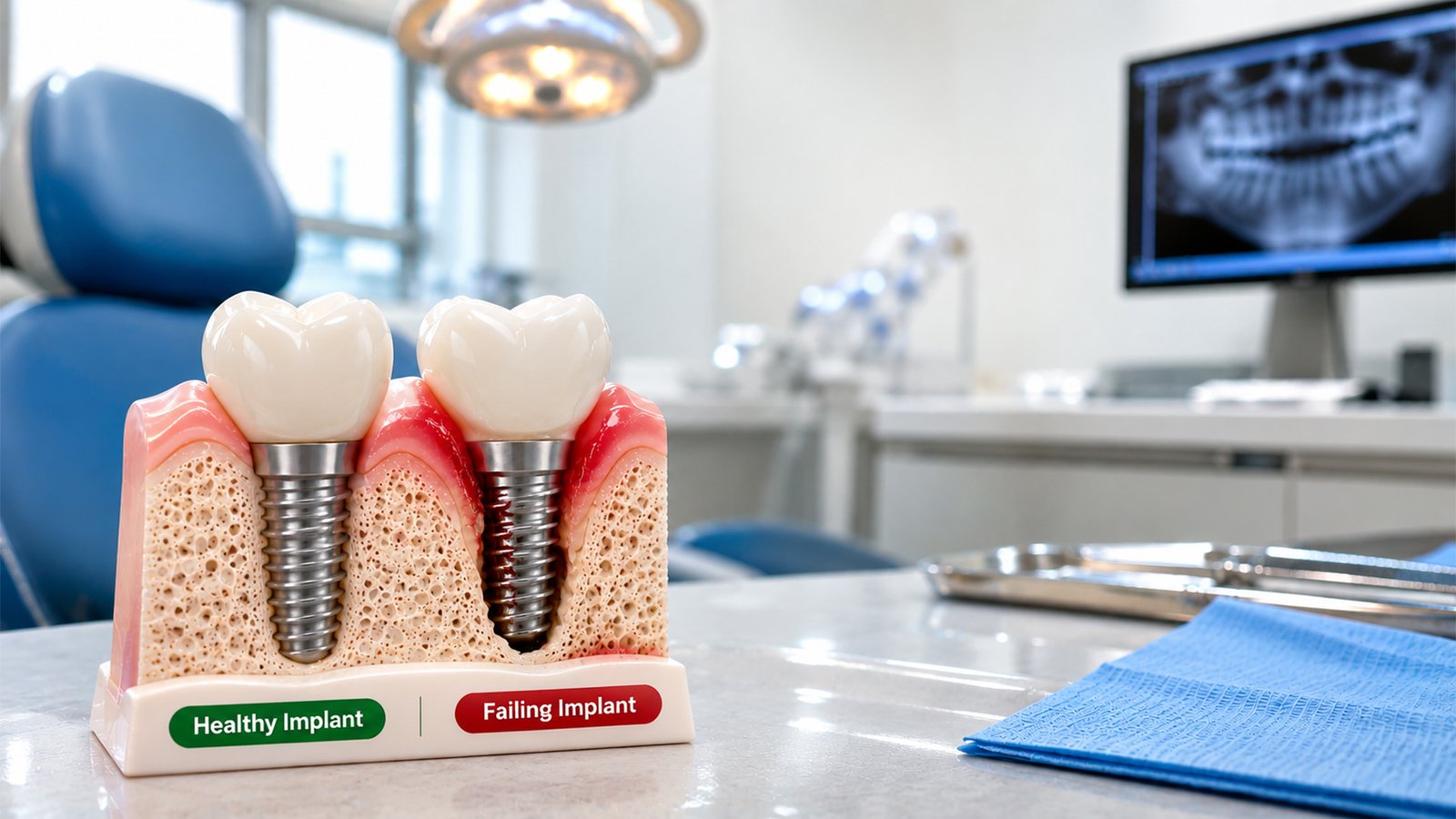
You invested in it, waited for it to heal, and now you have your full smile. Somehow, something doesn’t seem right. Perhaps a mild ache won’t subside, or when you bite down, the tooth feels like it is moving. Perhaps you have swollen, painful gums around the dental implant site.
If you’re thinking that, you’ve most likely already gone through the mental exercise of imagining the worst. That’s completely normal. However, when a dental implant doesn’t work out, it’s not the end of the world. The vast majority of problems can be treated, and many implants can be fixed or replaced successfully, especially when you catch early signs or symptoms.
This tutorial covers the reasons for implant failures, the signs to watch for, and what you should do next.
Does a Failed Dental Implant Mean You Did Something Wrong?
No, in general, the success rate of dental implants is very high, as high as 95 percent, but no medical procedure can be guaranteed. Implant failure usually results from a combination of factors. More often, it’s a combination of healing, oral health, medical history, and sometimes simply bad luck.
Some causes are within your control, some are within your dentist’s control, and some are not. We’ll go through all of them. For now, remember that blame isn’t helpful here, but Information is.
What “Failed” Actually Means
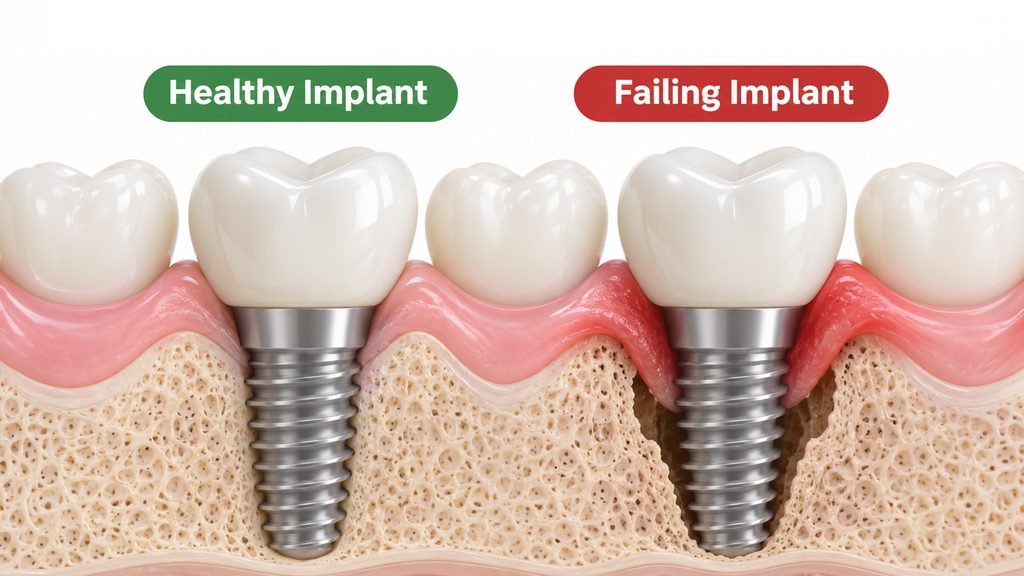
The news has been dramatic; let’s be specific! A dental implant is a small titanium post that is inserted into your jawbone and used as an artificial tooth root. During the first few months, the bone is expected to grow around it and keep it in place. This is known as osseointegration, and this is the basis of everything.
Early failure occurs in the first weeks or months, when the implant does not attach securely to the bone. Does not lock in or wobbles.
Late failure occurs after a period of time (often years) once the implant is stable. The support around the implant begins to deteriorate due to some factor such as infection, bone loss, or excessive stress.
Then there is a middle ground of “failing” implants that haven’t failed yet. They’re still in place, but show signs of trouble. Now’s the time to act, as there is a better chance of saving it.
Common Causes of Dental Implant Failure
Infection Around the Implant
This is the main one. Peri-implant mucositis is characterized by inflammation of the gums around the implant, caused by bacterial accumulation. If left untreated, the infection can progress and begin to eat away bone. This is known as “peri-implantitis” and is one of the most common causes of implant failure in the long term.
Think of it as gum disease around an implant. Like gum disease, it can develop gradually and silently, without pain early on.
Not Enough Bone to Hold the Implant
A robust base is essential for implants. The jawbone itself may be thin or weak, especially if a tooth has been missing for several years and the bone has weakened as a result. A reputable dentist will assess bone density and volume before placing anything and may recommend a bone graft first. Without doing so, or by mismatching the required support, the implant can cause problems.
The Implant Never Fused Properly
Sometimes the bone simply will not attach itself to the implant as it should. This may occur due to poor blood supply to the area, excessive movement during healing, or weaker healing in certain individuals. This is frustrating because everything may look fine at first, and then the implant becomes loose in the following weeks.
Smoking and Tobacco Use
Smoking impairs blood flow to the gums and bone, which hinders healing and increases infection risk. Several studies have consistently shown that smoking increases the risk of implant failure. It’s a good idea if you’re a smoker to have an honest discussion with your dentist before and after treatment.
Certain Health Conditions
A host of other diseases such as uncontrolled diabetes, autoimmune disorders, osteoporosis drugs, and previous radiation to the jaw area can all impact healing around an implant. Although none of these necessarily exclude implants, your dentist should be aware of them. Controlling the condition really does make a difference.
Teeth Grinding and Heavy Bite Pressure
Teeth grinding and heavy bite pressure. Grinding teeth and excessive forces on the bite.
When you clench or grind your teeth, particularly at night, your implant takes the brunt of it. Natural teeth have a slight cushion from the ligament around the tooth. Implants don’t. With continued, repeated force, the implant can loosen or damage the natural bone.
Planning or Placement Problems
At times, the problem is in the planning and placement of the implant. The risk is greater if it was not positioned at the correct angle, placed too close to a nerve or a neighboring tooth, or placed without adequate imaging. That is why experience and careful planning matter when choosing who places your implant.
Poor Aftercare
Unlike implants, the gums and bone surrounding the implant can develop cavities. Plaque can accumulate if you don’t brush, floss, or see your dentist regularly, which can lead to infection.
Warning Signs Your Dental Implant May Be Failing
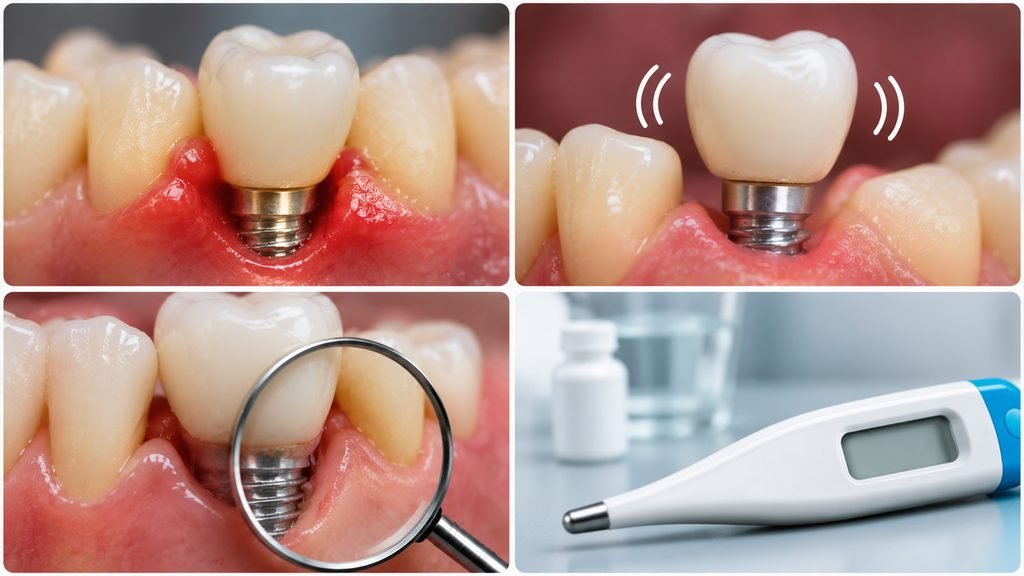
Your body will give you warning signs before it gets serious. Here are some of the warning signs to look out for:
- Pain or discomfort that lasts or gets worse instead of fading after healing
- Swelling, redness, or tenderness in the gums around the implant
- Gums that bleed when you brush or touch the area
- Pus, a bad taste, or persistent bad breath near the implant
- An implant or crown that feels loose or shifts when you chew
- Gums pulling back so that the metal part becomes visible
- Trouble biting or chewing on that side
- Fever or swollen glands along with any of the above
It is normal for the area to be a little tender the first week or two after surgery. If pain occurs months after the injury or doesn’t go away, it is not normal. Also, a failing implant might not be very uncomfortable, which is why regular checkups are important even if you have no symptoms.
What to Do If You Think Your Dental Implant Has Failed
This is the order we’d recommend.
Call your dentist right away. Don’t wait to see if it settles down. Early treatment is often the difference between saving an implant and having to remove it.
Leave it alone. Resist the urge to wiggle it with your tongue or finger, and don’t chew hard foods on that side. Pushing on a loose implant can make the damage worse.
Keep the area clean, gently. Use a soft brush and rinse with warm salt water. Don’t scrub hard or use harsh mouthwash that could irritate already sore gums.
Avoid fixing it yourself. No home remedies, no leftover antibiotics from an old prescription, and no super glue on a loose crown. It sounds obvious, but people do try it when they’re anxious.
Bring your records. If your implant was placed elsewhere, bring any paperwork, X-rays, and procedure details. It helps your new dentist understand what they’re working with.
Know when it’s urgent. Severe swelling, trouble swallowing or breathing, or a fever alongside facial swelling needs same-day care.
What Happens Next: Treatment Options
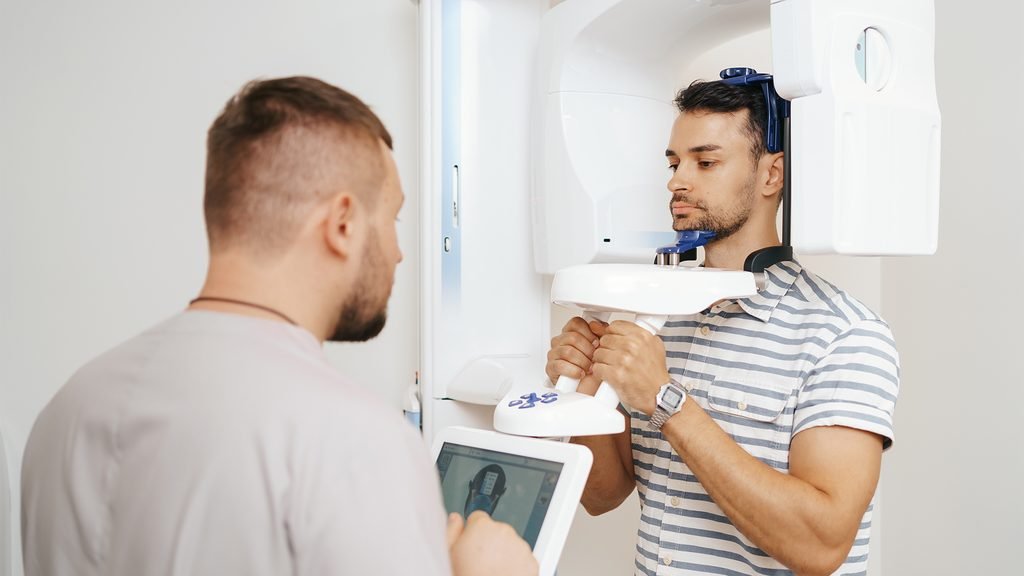
After a dentist examines the area and takes X-rays or a 3D scan, they will determine whether the implant can be saved. The next step will depend on what is causing the problem.
If it’s an infection caught early, treatment may involve a deep cleaning around the implant, antibiotics, and sometimes laser or surgical cleanup to remove infected tissue. Many implants recover well with this approach, as long as you keep up with the cleaning routine afterward.
If bone loss is the problem, your dentist may suggest bone grafting to rebuild what’s been lost. This can strengthen the area and give the implant, or a new one, a better foundation.
If the implant can’t be saved, it will need to be removed. That sounds scary, but it’s a straightforward procedure in most cases. After removal, the site is cleaned and allowed to heal, sometimes with a bone graft placed at the same time.
Replacing the implant usually comes after a few months of healing, once the bone is healthy enough to support a new one. Many people go on to have a second implant that works perfectly. The key is understanding why the first one failed so it doesn’t happen again.
If a new implant isn’t the right choice, other options include a dental bridge or a partial denture. Your dentist can talk you through what fits your mouth, your health, and your budget.
It’s fair to feel disappointed if you need to repeat the process. It does mean more time and, often, more cost. But a careful plan the second time around gives you a strong chance of a lasting result.
How to Lower the Risk of Dental Implant Failure
You can’t control everything, but you can stack the odds in your favor.
- Choose your provider carefully. Look for a dental team with real implant experience, who uses proper imaging and takes time to plan your case.
- Be upfront about your health. Share your medical history, medications, and habits, even the ones you’d rather not mention.
- Quit or cut back on smoking. Your implant and your gums will thank you.
- Look after your mouth every day. Brush twice, floss or use interdental brushes, and don’t skip the area around the implant.
- Keep your checkups. Professional cleanings and exams catch trouble you can’t see or feel.
- Protect against grinding. If you clench at night, ask about a custom night guard.
Don’t Wait, Get It Looked At
A dental implant that doesn’t feel right can be stressful, but you still have options. The sooner you get it checked, the more choices you’ll have and the better the likely outcome.
If you’re noticing pain, swelling, or movement around your implant, the team at Premiere Dental can take a careful look and explain your options in plain language. Book an appointment today and get clear answers about what’s happening and what comes next.