That 3 PM chocolate craving? Completely valid. The guilt that follows? Also valid, especially when you know what sugar does to your teeth. The truth is, most of us grow up loving sweets, but nobody teaches us how sugar affects teeth until a dentist points at a cavity and says it’s too late. The good news is you don’t have to choose between your sweet tooth and a healthy smile. Here we share simple habits and everything you need to enjoy sweets without causing dental damage.
How Sugar Causes Tooth Decay
Consuming sugar causes cavities because bacteria in your mouth feed on sugar, creating acids that destroy your tooth enamel, the hardest layer of your tooth, and once it is worn out, it won’t grow again. What these bacteria actually do to your teeth:
- Acid Attacks: Every time you consume sugar, your teeth endure an “acid attack” that lasts at least 20 minutes and gradually weakens them.
- Demineralization: When plaque pH drops below 5.5, acid dissolves minerals in the tooth enamel, causing it to weaken.
- Plaque build-up: Plaque, a thin, colorless, sticky layer that forms on your teeth, acts as a breeding ground for these bacteria.
Although there are many disadvantages to sugar consumption, you can address these issues by choosing healthier alternatives.
Smart Sweet Swaps: Satisfy cravings without the damage
A simple solution to satisfy your cravings is to switch to sugar-free alternatives, such as natural sweeteners that do not feed your cavity-causing bacteria and that enhance saliva production, which neutralizes acids. The key is to avoid sticky sugar foods and beverages and choose nutrient-rich options that support your enamel health.
Dark Chocolate vs Milk Chocolate
| Feature | Dark Chocolate | Milk Chocolate |
| Sugar level | Low | High |
| Cocoa Content | High (70% – 85%) | Low (<30%) |
| Enamel Effect | Strengthens your enamel | Weakens your strength |
| Cavity risk | Risk is low | Risk is high |
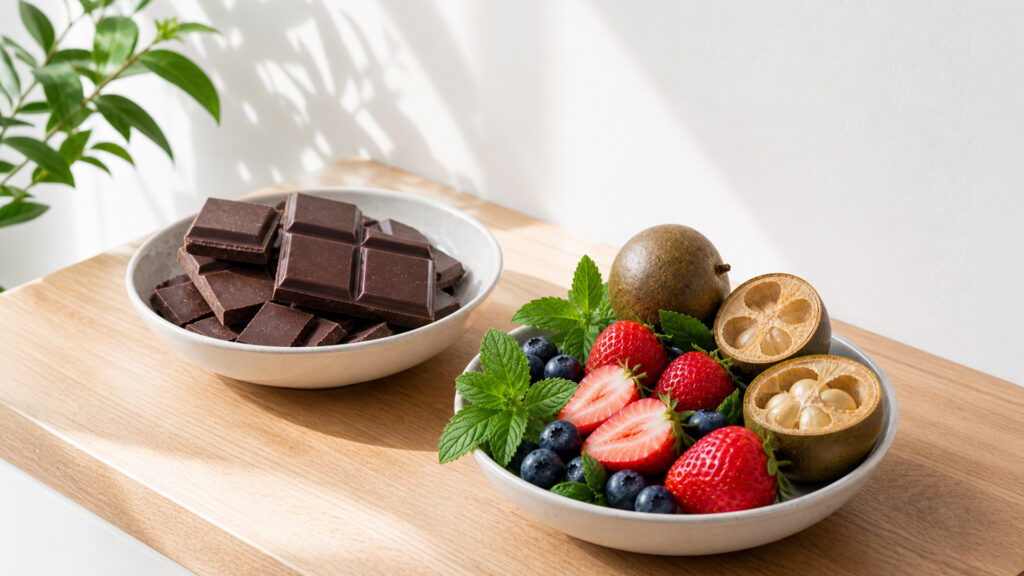
Researchers say that dark chocolate is the superior option for dental health in comparison to milk chocolate. While both contain sugar, dark chocolate (especially 70% or higher) has been shown to contain less sugar and to contain compounds that can actively protect teeth, unlike milk chocolate.
Reasons why dark chocolates are a better option for teeth:
- Lower Sugar Content: Dark chocolate has less sugar, reducing the “fuel” for bacteria.
- Antibacterial Properties: Dark Chocolate contains polyphenols that fight bacteria and prevent them from turning into harmful acids.
- Strengthens Enamel: It contains a compound called theobromine, which has been shown to strengthen enamel and reduce the risk of cavities.
- Less Sticky: Unlike milk chocolate, dark chocolate does not stick to teeth as easily, preventing long-term exposure to cavity-causing substances.
- Antioxidants: The antioxidants in dark chocolate help fight gum disease.
Sugar-free alternatives: What actually works
Sugar-free alternatives that do not spike blood sugar include monk fruit, stevia, and allulose. It is scientifically proven that these alternatives are zero-calorie, plant-based sweeteners. Allulose and Monk fruit are often preferred for their lack of a bitter aftertaste compared to Stevia.
Best sugar-free alternatives:
| Sweetener | Sweetness | After taste | Cavity Risk | Best used in |
| Monk Fruit | 200x sweeter | None | Zero | Drinks, baking |
| Stevia | 200-400x sweeter | Slightly Bitter | Zero | Tea, coffee |
| Allulose | 70% as sweet | None | Very low | Desserts, cooking |
| Erythritol | 70% as sweet | Slight Cooling | Zero | Sweets, baking |
Eating habits that protect your teeth even when you snack
Now you’ve shifted to dark chocolate; you’re using stevia in your coffee. Great. But if you’re snacking every hour, your teeth are still under constant danger. It is very important to maintain good eating habits and a healthy diet to maintain good dental health. Small habits make a surprisingly big difference. Here’s what actually works:
- Rinse with water: Swish with water right after eating sugar to remove sticky residues.
- Chew Sugar-free Gum: This will stimulate saliva, which acts as a natural cleanser, rinsing away acids and sugar.
- Consume dairy products: Eating cheese or other dairy after sweets helps balance the mouth’s pH.
- Brush with fluoride toothpaste: Wait at least 30 minutes for saliva to neutralize acids before brushing, which prevents brushing from acidifying the enamel deeper.
These habits go a long way, but no matter how clean your diet is, there is one thing that no habit can fully replace. Professional teeth cleaning.
Why regular teeth cleaning still matters even if you eat healthy?
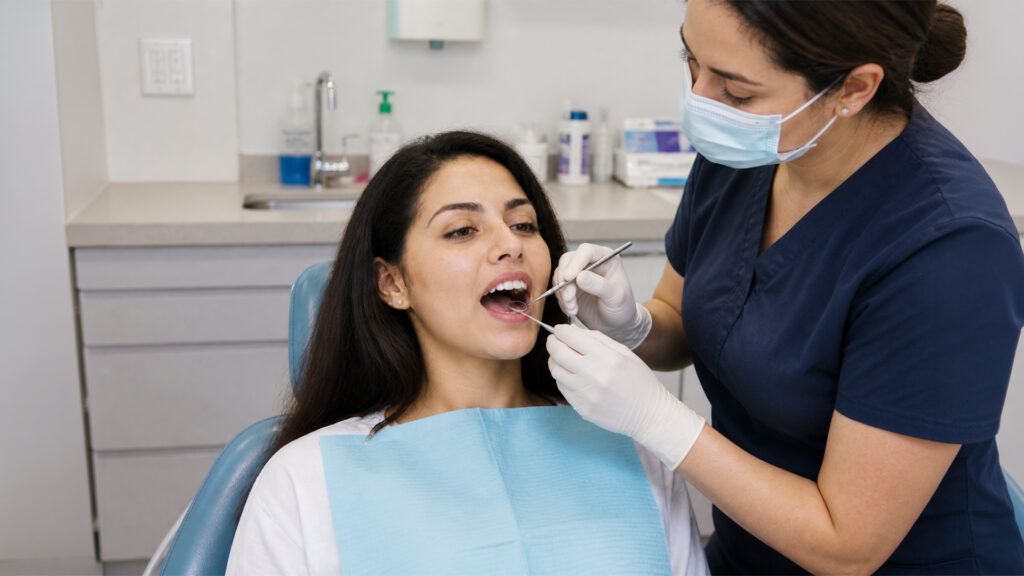
No matter how good your diet is or how well you follow healthy habits, getting a professional teeth cleaning completes the cycle. It removes tartar (hardened plaque) that regular brushing and flossing cannot. There are several benefits of professional teeth cleaning:
- Removing Tartar: Tartar is a porous, hardened layer of plaque that provides a safe environment for germs to live. It cannot be removed by daily brushing and flossing.
- Preventing Gum Disease: Tartar buildup irritates the gums, causing them to bleed, swell, and pull away from the teeth.
- Early detection of disease: A professional cleaning includes a thorough examination by a dentist that can identify issues invisible to the naked eye.
- Protecting overall health: Bacteria from infected gums can enter your bloodstream, potentially causing serious health issues such as heart disease, diabetes, and even Alzheimer’s.
- Deep Cleaning Hidden Areas: Your toothbrush can’t reach every corner of your mouth, so professional cleaning helps prevent bad breath and maintain your dental health.
- Removing Surface Stains: Even healthy foods and drinks can leave stains, and professional cleaning helps remove them and restore your teeth’s natural brightness.
| Action | Purpose | Limitation |
| Healthy Diet | Reduces acid attacks | Cannot remove existing plaque |
| Brushing/Flossing | Removes soft daily plaque | Cannot remove tartar |
| Professional Cleaning | Removes tartar and checks for diseases | Needs to be done every 6 months |
In short, a healthy diet is an excellent defense against the side effects of sugar, but professional cleanings are the necessary tool.
Conclusion
Enjoying sweets and maintaining healthy teeth are not opposites; you just need the right information, and I am sure if you have reached here, you are already aware of it. This blog highlights the damage sugar does to your teeth and shares habits and a diet to tackle it. What are you waiting for? Book your next professional cleaning at Premiere Dental and give your teeth the care they actually deserve.
FAQs
Should I brush my teeth immediately after consuming sweets or sugar?
Ans: No, as sugar creates an acidic environment that temporarily softens the enamel (the outer layer of the tooth). Brushing immediately can wear down this layer, which won’t grow back, so it is recommended to brush after 30 – 60 minutes.
Does brushing twice a day prevent sugar damage?
Ans: Brushing and flossing twice daily significantly reduces plaque buildup caused by sugar, but cannot prevent damage entirely, which is why diet choices and professional cleaning both matter.
Is rinsing with water enough?
Ans: It does help, but it does not remove plaque.
When should I see a dentist?
Ans: Every 6 months is a general recommendation. However, if you notice sensitivity, bleeding gums, or visible spots on teeth, visit sooner rather than waiting.