
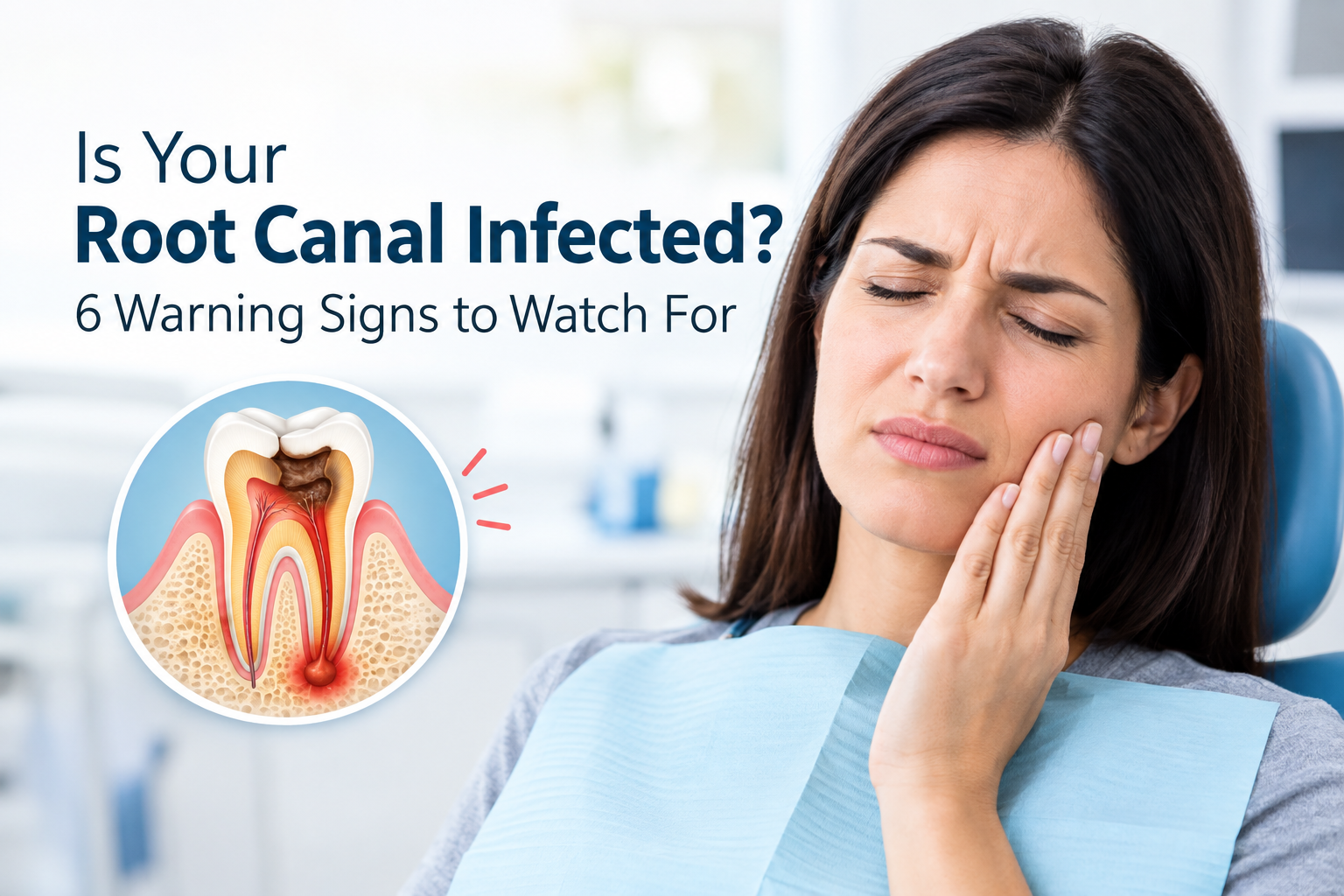
The purpose of a root canal is to remove any infection inside a tooth, not to introduce a new problem; therefore, it is natural to suspect that the root canal itself is the source of the pain when the tooth starts hurting again.
The good point is that it is normal to experience some tenderness following treatment, since the area around the tooth may feel sore as it heals, particularly in the first few days; this does not necessarily indicate that the treatment has failed.
Symptoms should be taken seriously if they return after the tooth had appeared to have improved, if they become more severe, or if they are accompanied by swelling. It is possible for a tooth that has been treated to develop a new infection or require further treatment. The earlier it is examined, the greater the chance that the tooth will be treated and saved.
There are six warning signs to watch for, along with advice on what might be normal and when you should contact your dentist or endodontist.
What does a root canal do?
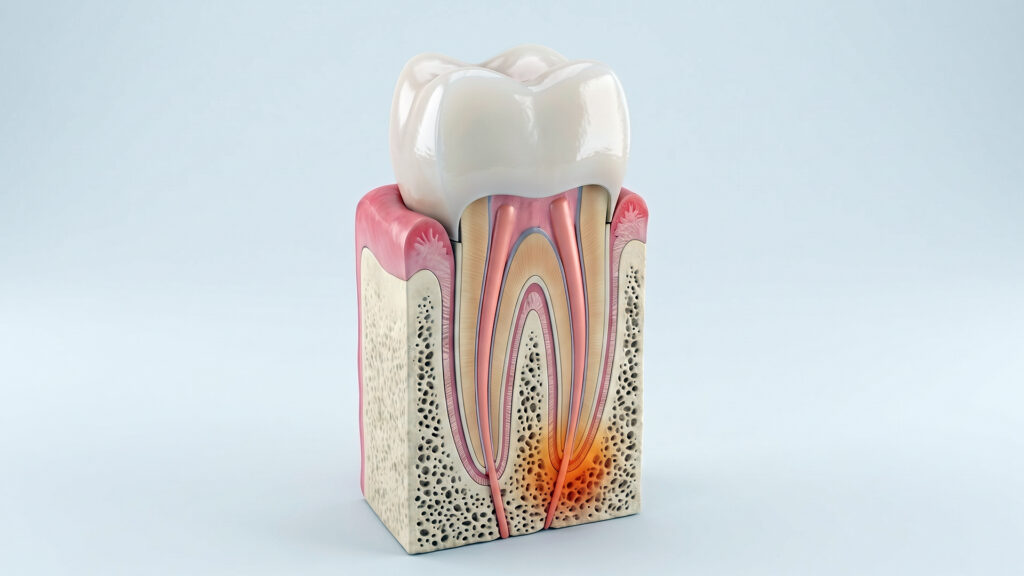
Every tooth has a soft part called the pulp, which contains nerves and blood vessels. If there is deep decay, a crack, or trauma, bacteria can reach the pulp, causing inflammation or an infection.
In a root canal procedure, the dentist removes the infected pulp, cleans and disinfects the internal canals, and then seals the area. The tooth is then filled, and in most cases, a crown is placed. The NHS states that the aim of the treatment is to eliminate the infection and seal the tooth to help prevent reinfection.
A tooth does not thereby become indestructible since the filling might crack or come loose. A new cavity could develop at the edge of a crown or filling. In certain instances, bacteria may still be present in the canal or may enter through a leak. Such problems can cause infection to return many months or even many years later.
What does normal feel like after a root canal?
After a root canal, it is possible to experience mild soreness, tenderness when biting, or numbness near the treated tooth. The tissues surrounding the root can become irritated by the procedure, even after the infected pulp has been removed.
The NHS states that the area around the tooth may feel swollen and painful, but this should improve after a few weeks; the American Association of Endodontists also notes that some tenderness for a few days can be part of the healing process.
Recovery should generally proceed in the correct direction; at first you might feel uncomfortable, but the pain should then slowly subside. However, if it worsens, remains severe, or is accompanied by other symptoms, you should telephone the dental office rather than waiting it out.
Six warning signs of possible infection
1. The pain comes back after the tooth had improved
A tooth which, after a time during which it had not been causing any pain, starts to hurt again should be looked at.
The pain can be dull, aching, sharp, or hard to pinpoint; it might be felt in the tooth or could cause discomfort to spread towards the jaw, cheek, ear, or adjacent teeth. In some cases, the return of the pain is slight, and you may just realize that the tooth has begun to feel ‘wrong’ once more when you chew.
Pain may be due to a number of reasons, such as a new cavity, a cracked tooth, an uneven bite, gum disease, or inflammation around the root; however, it does not necessarily mean that the infection has returned, only that you should contact your dentist.
A dentist can examine the tooth, check the filling, test the adjacent teeth, and take an X-ray; if the infection has returned within the tooth, the endodontist might discuss root canal retreatment or other options.
2. The tooth causes pain whenever you bite it or when you touch it.

Another important indication is pain when biting, especially if it is new or worsening.
You could experience pressure as a result of chewing, a sense of tenderness when the tooth is tapped, or a sharp feeling when you take your bite off. In some instances, a restoration positioned too high leads to increased pressure and discomfort. In other cases, it may be due to inflammation around the root or a crack.
If your bite feels uneven or if any symptoms you experienced before treatment return, the American Association of Endodontists recommends that you contact your dentist.
You shouldn’t chew on the tooth to check it, as this could cause further irritation and put excessive pressure on an already weak tooth. For now, use the opposite side and arrange an examination.
3. Your gums are swollen, or a pimple has shown up
Near a treated tooth, a small bump may appear that looks like a spot or a blister. It can sometimes release fluid or pus before shrinking. Even when the bump is not particularly painful, it could mean the body is clearing an infection through the gum.
Swelling may occur in the gum next to the tooth, in the jaw area, or on the face; the affected area might feel tender, warm, or tight. According to the Cleveland Clinic, symptoms of an infected tooth include a pimple or boil on the gums, a swollen jaw, and tender or swollen gums.
Don’t press on the lump or use any home remedies on it, because although drainage might temporarily relieve the pressure, it won’t eliminate the source of the infection. You should get in touch with your dentist to have it assessed.
4. You will observe the presence of pus, an unpleasant taste, or bad breath that persists
Pus can appear as a clear fluid around the gum or on the tooth, and you might notice a bitter, salty, or unpleasant taste that returns after brushing. Although there are numerous possible causes of chronic bad breath, it should not be ignored if it occurs together with pain, swelling, or drainage near a tooth that has already been treated.
The symptoms could indicate bacterial activity or an abscess, or they might be caused by gum disease or by a neighboring tooth, which is why a professional examination is needed.
Mouthwash can only temporarily mask odor and cannot eliminate an infection in the tooth or under the gum. It’s important to keep the area clean, stop smoking, and contact your dental office.
5. The tooth is now loose or seems different.
A tooth that feels loose following a root canal should receive prompt treatment, as infection around the root can affect the bone and supporting tissues; furthermore, a crack, gum disease, or heavy biting forces may also cause movement.
You will probably notice that the tooth appears taller, has moved, or contacts the opposing tooth differently. The restoration might also feel loose, even though the natural tooth underneath is stable.
You should not attempt to pull, wiggle, or remove a crown or filling on your own. Until a dentist has examined it, avoid eating hard or sticky foods, as a loose filling or crown could allow bacteria to enter, leaving the tooth susceptible to further damage.
6. You have swelling, a fever, or feel sick overall.
A dental infection may, in some cases, spread to the tooth from which it first originated. If the swelling increases, a fever develops, chills occur, the glands become swollen, or one feels unwell, these are all warning signs that call for immediate medical attention.
Facial swelling is particularly important; go for urgent care if the swelling is spreading, if your eye area is involved, or if you have difficulty opening your mouth. It is an emergency if you have problems swallowing, speaking, or breathing.
You shouldn’t assume that the pain has stopped as evidence that the infection has been cured, since in some cases the pain can be relieved by applying pressure even though the underlying issue remains. Although antibiotics may be given in some cases, they do not replace dental treatment that addresses the source of the infection. It will be up to your dentist or doctor to decide if they are suitable.
What causes a root canal to become infected once more?
There could be several reasons why further treatment is needed after a root canal. The original canals might have been rather narrow or curved, making them hard to clean thoroughly. A new crack might appear. The crown or filling might become loose, allowing bacteria to enter. Another cavity could develop around the filling.
Some teeth have extra canals that are not detected during the initial treatment, and reinfection may occur if the final crown is delayed or if the temporary filling breaks down.
The American Association of Endodontists notes that a tooth that has been properly treated may still require retreatment years later, even though it can often be saved. That is the reason why any new symptom should be assessed rather than immediately attributed to the original treatment.
What is the way in which a possible infection can be diagnosed?
Your dentist will inquire into the timing and pattern of your symptoms; they might examine your gums and the filling, tap on the tooth, check your bite, and compare the tooth with the ones next to it. X-rays can help show any changes around the root or bone.
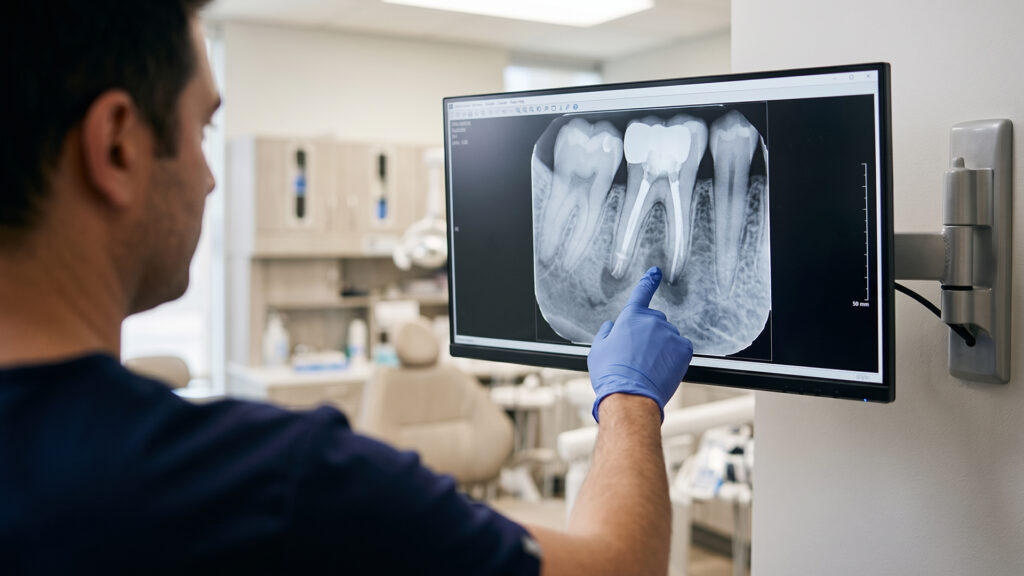
In some cases you could be referred to an endodontist, who is a dentist who has received further training in the diagnosis and treatment of problems relating to the tooth pulp and the tissues surrounding the roots.
The recommended treatment will depend on the results obtained; it could include a bite adjustment, repair or replacement of a crown, root canal retreatment, an apical procedure, or extraction if the tooth cannot be predictably saved. Your dentist should explain the various options, along with their benefits, risks, and expected outcomes.
While you are waiting for your appointment, what ought you to do?
Stick to the instructions provided by your dental team and gently continue brushing and flossing around that area. Do not chew on hard foods with the tooth that has been treated, particularly if it has only a temporary filling or crown.
When taking over-the-counter pain relief, you should follow both the instructions on the package and your dentist’s advice. If you have a medical condition, are taking other medications, are pregnant, or are unsure which option is safe for you, it is best to ask a pharmacist or healthcare professional first.
You should not put aspirin directly on the gum or a tooth, as it may irritate or burn the soft tissue. Also, do not use leftover antibiotics or those prescribed to somebody else.
Warning signs at a glance
| Symptom | Why it matters | What to do |
| Pain returns after improvement | May signal reinfection, a crack, or another dental problem | Contact your dentist. |
| Pain when biting | May involve bite pressure or inflammation around the root | Arrange an examination. |
| Gum pimple or swelling | May indicate drainage from an abscess | Seek prompt dental advice. |
| Pus, bad taste, or persistent odor | Can be associated with bacterial infection | Contact your dentist. |
| Loose tooth or restoration | May expose the tooth or reflect support problems | Avoid chewing on it and call the dental office. |
| Fever or facial swelling | May indicate a spreading infection | Seek urgent care. |
Conculsion
It is normal to experience some soreness after a root canal, particularly in the first few days; the thing to be concerned about is pain that worsens, returns after it has improved, or is accompanied by swelling, drainage, a loose tooth, or a fever.
If you notice any of the six warning signs, it is important not to panic but also not to ignore them. You should telephone your dentist or endodontist and give them a clear description of the sensations you are experiencing. Early assessment will help to determine whether the tooth is healing properly, if it merely needs a slight adjustment, or whether it needs additional treatment.
Providing timely treatment can enable a large number of root canal cases to be handled without losing the natural tooth.